
What if the mold you can see is only a small part of the problem? Wiping a surface may leave hidden moisture untouched, allowing mold to return and damage to spread. A professional mold removal process assesses the affected area, addresses moisture conditions, and determines which materials can be cleaned and which may need removal.
This guide walks through the main stages, from inspection and containment to cleanup and recovery. You’ll learn what technicians look for, how material type affects cleanup decisions, and what you can do to prepare for work at your property.
For property owners in Vancouver, Washington, knowing what to expect can make a stressful situation more manageable. Droplet Restoration’s IICRC-certified technicians assess affected homes and businesses, identify moisture concerns, and guide the next steps. The process is methodical: understand the damage, contain the work area, remove or clean affected materials, and address the conditions that contributed to the growth.
Key Takeaways
- The mold removal process focuses on affected growth and moisture conditions, not sterilizing an entire building.
- Inspection findings help define the affected area and guide containment before cleanup begins.
- Material condition matters: hard surfaces may be cleanable, while some porous materials may need removal.
- Share what you know about leaks, dampness, and when you first noticed mold, then follow directions around the work area.
- Droplet Restoration serves Vancouver and nearby southwest Washington communities with IICRC-certified technicians and direct insurance-provider coordination.
What the Mold Removal Process Is Designed to Do
Seeing mold can make it seem as if the whole property needs treatment. Professional work is targeted: the affected area is assessed, moisture conditions are considered, and cleanup is planned around the materials involved. The goal is to remove affected material where needed, clean suitable surfaces, and address dampness that can support renewed growth.
Professional mold remediation is the targeted assessment, containment, cleanup, and material removal needed to address mold growth and the moisture conditions that support it. It does not mean sterilizing every room or eliminating every microscopic spore. A practical plan focuses on the affected area and relevant moisture conditions instead of treating the entire building without cause.
Mold removal versus mold remediation
People often use “mold removal” to describe the full professional response. Remediation is broader: it involves determining what is affected, controlling the work area, cleaning or removing materials as appropriate, and addressing contributing moisture. Wiping visible spots alone can leave dampness or affected material behind, allowing growth to return. The Mold remediation process overview also describes remediation as more than simply wiping away visible spots.
The distinction helps set realistic expectations. The aim is not to make an indoor environment entirely free of mold spores. Instead, professionals address visible growth and affected materials within the assessed scope while reducing conditions that encourage growth. The plan depends on inspection findings, not just how large a spot appears.
Why moisture belongs in the process
Mold needs suitable conditions to grow, and moisture is a key one. A leak, persistent dampness, or moisture retained in building materials can undermine surface cleaning if the underlying condition remains. That’s why the response considers both the growth and what is keeping the area damp. The right steps depend on the moisture source, its extent, and the condition of nearby materials.
A small visible patch near a leak, for example, may not show the full extent of moisture-affected material. Discoloration also does not automatically mean every nearby surface needs removal. An assessment helps establish where cleanup is needed and which materials may be affected. This keeps the work focused and helps clarify what can be cleaned, what may need removal, and what recovery could involve.
How Inspection and Containment Shape the Mold Removal Process
A careful assessment turns uncertainty into a practical work plan. Technicians look at visible growth, the surrounding area, and signs of moisture to understand what may be affected. These findings help define the scope before removal starts. A mark on one surface may be limited, or it may point to a broader damp area that needs attention.
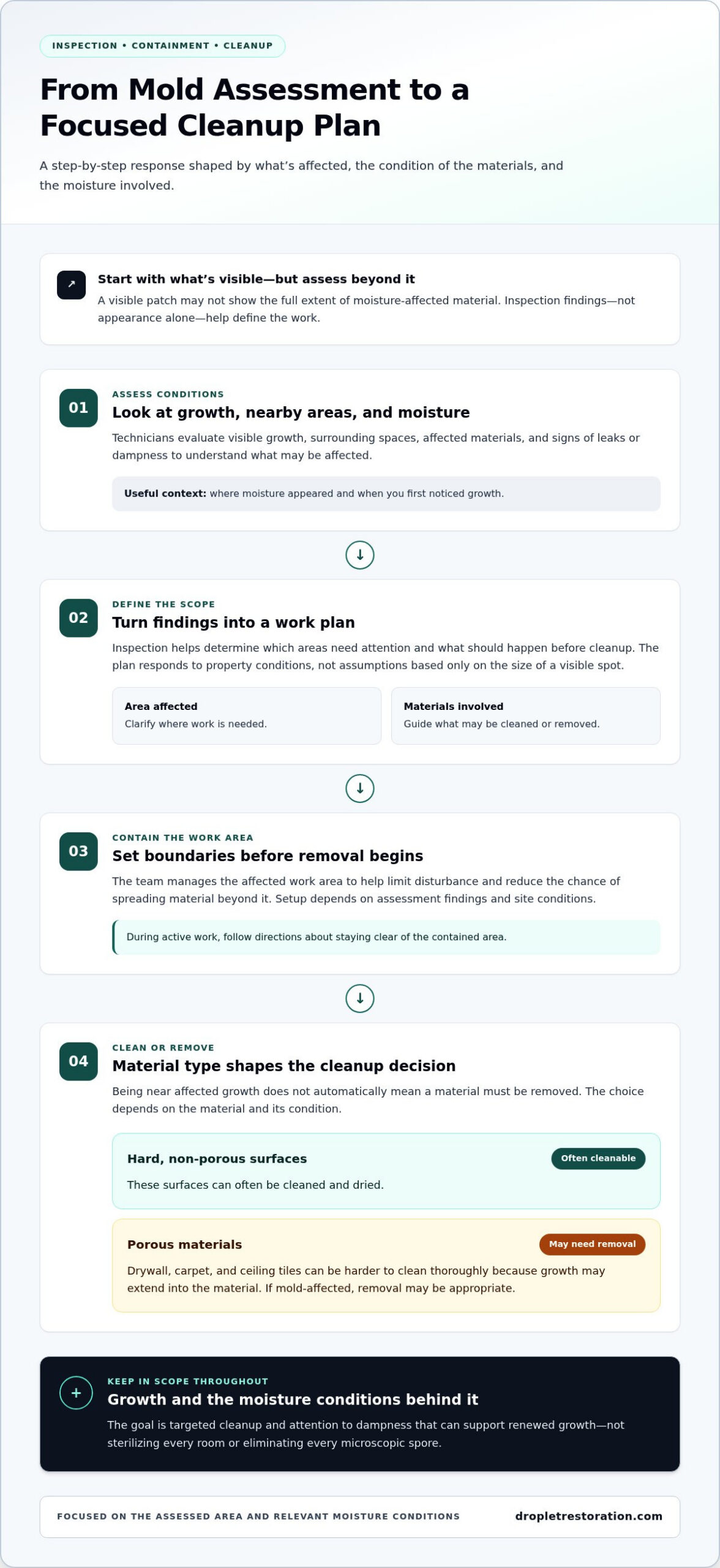
First, assess conditions; next, define the scope; then, contain the work area; finally, begin removal. This sequence keeps the response focused on the property’s actual conditions rather than assumptions based only on what is visible.
What happens during an assessment?
Technicians evaluate visible growth and nearby areas, noting conditions that may help explain how far the problem extends. They consider known leaks or dampness and the condition of affected spaces and materials. These observations inform the work scope: which areas need attention and what should happen before cleanup begins. Share what you’ve noticed, including where moisture appeared and when you first saw growth.
Assessment findings guide decisions, but concealed conditions may become clearer as work proceeds. If additional affected material is found, the plan can account for it. The EPA mold cleanup guidelines for homeowners offer general context on cleanup and when a professional response may be appropriate.
Why professionals contain affected areas
Before removal begins, the team manages the work area to help limit disturbance and reduce the chance of spreading material beyond the affected space. Containment sets boundaries around active work. Its size and setup depend on the assessment and conditions at the property.
This step matters because removal can disturb affected materials. A defined work area helps keep the job organized and makes clear where work is underway. Follow directions about staying clear of that area during active work. Containment supports a controlled transition from assessment to cleanup, rather than starting removal before the affected area has been considered.
If you’ve found visible growth or signs of dampness, arranging a mold assessment with Droplet Restoration can help establish the scope and next steps. Clear findings support practical decisions about containment and removal, so the work responds to conditions at your property instead of relying on a one-size-fits-all plan.
Mold Cleanup, Material Removal, and Restoration: What Changes?
Once the affected area is understood, the next decisions are practical: what can be cleaned, what may need removal, and what recovery work follows. Material type matters. A hard surface and a porous building material can respond differently to the same mold problem, so being nearby does not automatically mean an item must be removed.
Which materials may be cleaned or removed?
Hard, non-porous surfaces can often be cleaned and dried. Porous materials, such as drywall, carpet, and ceiling tiles, can be harder to clean thoroughly because growth may extend into the material. If the material is mold-affected, removal may be appropriate. The CDC mold cleanup safety recommendations also offer guidance for people handling cleanup and affected items.
That doesn’t mean every nearby belonging or building component must be discarded. The decision depends on the item’s material and condition, the extent of the affected area, and inspection findings. A hard item may be cleanable, while porous material with growth may not be. Technicians consider these differences when determining what to retain, clean, or remove.
Contents cleaning and building-material work are related, but they are not the same task. Furniture or personal belongings may need separate cleaning decisions, while affected building materials may need removal to address the contaminated section. Keep items out of the active work area as directed, and avoid handling affected materials unnecessarily. The assessed scope guides decisions about contents and the building itself.
What restoration means after cleanup
Remediation addresses the mold-affected area; restoration follows to help return that part of the property to usable condition. If drywall or another building material is removed, the resulting opening may need repair or replacement after cleanup is complete. The specific work depends on what was affected and what the assessment identifies. Not every project requires the same repairs.
Think of the transition as two connected stages: first address affected materials, then recover the impacted part of the property. Restoration should follow necessary remediation, rather than cover up a problem before cleanup is complete. A limited area may need a different recovery plan than a larger section with several affected materials.
The mold removal process can lead to different outcomes from one property to another. The plan should match the findings, whether that means cleaning suitable surfaces, removing affected porous material, or repairing an area after remediation. The team can explain which materials are included in the assessed scope and how the work connects to the next recovery steps.
What Property Owners Can Do Before and During Remediation
You don’t need to diagnose the problem before the team arrives. A few clear details about what you’ve seen can help technicians understand the property’s conditions and focus the assessment. Share what you know, then let the findings guide the work.
Information to share with the restoration team
Point out where you’ve seen growth or noticed a musty odor, including if signs appear in more than one area. Mention known leaks, past dampness, and when you first noticed the growth. If belongings may be affected, identify them so the team can consider them in the work plan.
You don’t need to have every answer. If you’re unsure when a leak began or whether a particular item is affected, say so. Straightforward information helps technicians compare your observations with the conditions they assess and determine the appropriate scope.
What to expect while work is underway
The team manages activity around the assessed work area. Keep people away from that area as directed, and follow property-specific instructions about access or belongings. Boundaries vary with the location and scope, so follow the directions for your property rather than assuming every project is handled the same way.
Cleanup and drying needs depend on the materials and conditions involved. Some surfaces may need cleaning, while affected material may require removal before recovery work can proceed. Avoid moving items into or out of the work area unless the team says it is appropriate. Raise questions about an item or room before handling anything there.
Don’t paint or caulk over visible mold to hide it. Covering the surface doesn’t address the condition beneath it, and cleanup and drying should come before finish work. Let the remediation team assess the area and explain the next steps.
Preparation can stay simple. Gather the details you remember and make the affected area accessible as directed. During remediation, follow the team’s instructions and report any new leak, dampness, or area of concern. This helps keep the work aligned with the property’s conditions.
If you’ve noticed mold or persistent dampness, schedule a mold assessment with Droplet Restoration to understand the affected scope and plan the next steps.
Getting Professional Mold Removal in Vancouver, Washington
If you suspect mold and can’t tell how far it extends or what is keeping an area damp, a professional assessment can clarify the next steps. Droplet Restoration provides mold removal and property-damage restoration for homes and businesses in Vancouver and nearby southwest Washington communities. Its IICRC-certified technicians assess affected conditions and guide the response based on their findings.
Local help for Vancouver-area properties
Droplet Restoration serves Vancouver, Battle Ground, and Camas, as well as Ridgefield, La Center, Longview, Kelso, Woodland, Castle Rock, and Kalama. Local support helps property owners move from uncertainty to an assessed plan, whether visible growth appears limited to one area or its extent is unclear.
Droplet Restoration offers 24/7 emergency restoration services. This can be useful when a property issue needs prompt attention. The first priority is understanding the conditions and determining the appropriate response for the property.
A clear next step when mold is suspected
Professional assessment is especially useful when you can’t identify the moisture source, when signs appear in more than one place, or when you’re unsure which materials are affected. Share what you’ve noticed, including known leaks or dampness and when you first saw growth. Those details help technicians assess the scope.
Insurance can be another source of uncertainty during property recovery. Droplet Restoration works directly with insurance providers to support the coordination process. This can help with communication, while the property assessment and the insurer’s process remain distinct parts of addressing the damage.
The mold removal process starts with understanding the affected conditions, then moves into work suited to those findings. An inspection can clarify what needs attention and how remediation connects to recovery, without assuming every property requires the same work.
Schedule an inspection with Droplet Restoration to discuss an assessment for your property.
Take the Next Step Toward a Clear Plan
Uncertainty can make a mold concern feel bigger and harder to manage. You don’t need to determine the full scope or choose a cleanup plan on your own. Document what you’ve noticed and arrange an assessment. Clear information about the property can help turn concern into a practical next step.
The mold removal process begins with understanding the conditions at your property. An inspection can clarify what needs attention and give you a basis for moving forward. Taking that first step can help you make informed decisions about the affected space and its recovery.
Schedule an inspection with Droplet Restoration to discuss your concerns and plan the next step.
Frequently Asked Questions
Can mold be completely removed from a home?
Not in the sense of eliminating every microscopic spore. Spores exist indoors and outdoors, so remediation focuses on affected growth and materials, not sterilizing a whole home. The practical goal is to address the areas identified for cleanup and the moisture conditions involved. A professional plan defines the work, but it can’t guarantee a spore-free building.
How long does the mold removal process take?
There’s no fixed duration. The mold removal process depends on the affected area, materials, moisture conditions, and restoration work needed. An assessment helps establish the scope, while drying and repairs can affect the overall schedule. The team can explain which conditions shape the plan for your property and what work remains before recovery.
Does mold always mean I need to replace drywall or carpet?
No. Material type and condition guide that decision. Hard surfaces may be cleanable, while mold within porous drywall or carpet can be difficult to remove fully. Replacement isn’t automatic; technicians assess which materials are affected and determine the appropriate scope. Point out areas of concern, including spots that may be concealed by furniture or belongings.
Should I stay in my home during mold remediation?
It depends on the work location, its extent, and your household’s circumstances. Discuss access with the restoration team and follow its property-specific directions, especially around active work areas. If you’re unsure about entering a room or moving belongings, speak with the team before doing so.
Will mold return after professional removal?
It can return if moisture conditions remain or develop again. Report active leaks or persistent dampness so they can be considered during the project. After cleanup, pay attention to recurring damp spots or musty odors and address new moisture concerns promptly. Remediation can’t guarantee mold won’t return if the conditions that support growth persist.
Do I need mold testing before the removal process starts?
Not necessarily. Whether testing is useful depends on the property and project; it isn’t always required or always unnecessary. A professional assessment considers visible signs, nearby areas, and moisture conditions to help define the work. It can help determine whether a visible spot appears limited or whether additional areas need attention before the plan is set.
