
A room can look dry while water remains behind walls, beneath flooring, or inside insulation. Knowing how to prevent mold after water damage means checking beyond visible puddles and stains. Moisture trapped in building materials can keep the problem going even after surfaces appear dry.
First, stop more water from entering and make sure the area is safe. Then remove water you can reach safely, move wet belongings, and begin drying. This guide explains how to trace water, monitor affected areas, and recognize when cleanup may be unsafe to handle yourself.
When water may have reached hidden spaces, a professional assessment can help identify moisture that isn’t visible and guide the next steps.
Key Takeaways
- Stop the water source if it’s safe, remove accessible water, and begin drying.
- Check beyond the visible stain. Floors, walls, ceilings, and nearby rooms may hide damp materials.
- Household cleanup may suit a small, accessible incident. Widespread damage, concealed moisture, or unsafe conditions call for professional help.
- Fans and dehumidifiers can support drying, but appearance alone can’t confirm hidden materials are dry.
- Monitor the affected area for persistent dampness, new staining, or recurring odors.
How to prevent mold after water damage: act on moisture first
Quick, organized moisture control can reduce the chance of mold after a leak or flood. It can’t guarantee a mold-free outcome, but acting promptly helps limit how far water spreads and how long materials stay wet. Put safety first, then stop the source if possible, remove accessible standing water, move wet belongings, and begin drying.
The U.S. Environmental Protection Agency advises drying wet or damp materials within 24 to 48 hours. Treat this as a prompt to act, not a guaranteed deadline. Conditions vary, and mold growth timing isn’t exact. For broader context on how water affects a home, see Water damage and its consequences.
What to do first when water enters your home
Before entering the affected area, look for electrical hazards, unstable materials, or water that may be contaminated. Stay clear of standing water near electrical equipment, damaged wiring, or outlets. Don’t touch electrical devices while standing on a wet surface. Keep people and pets away from questionable water and sagging ceilings. Cleanup can wait until the area is safe.
- Stop the source if it’s safe. Shut off a nearby fixture or water supply only if you can reach it without entering a hazardous area. If you can’t safely identify or stop the leak, leave it and keep people clear.
- Document the damage. If it’s safe, photograph standing water, affected rooms, and damaged belongings before moving them. Don’t delay urgent safety steps to take pictures.
- Remove accessible water and wet belongings. Move items you can handle safely and separate wet belongings from dry ones.
- Begin drying. Start with accessible surfaces. Don’t remove building components or disturb materials that may be unsafe.
Why visible drying is only the start
A surface can dry while moisture remains underneath or behind it. Water may seep into flooring, baseboards, drywall, insulation, and adjoining rooms. A dry-looking floor doesn’t prove the full affected area is dry. Watch for persistent dampness, swelling, discoloration, or a musty odor.
Mold prevention depends on controlling moisture throughout the affected area, not just drying what you can see. Fans and dehumidifiers can support drying, but they don’t confirm that hidden materials are dry. If water may have reached concealed spaces, or cleanup isn’t safe to manage, a professional assessment can help identify what still needs attention.
Where water hides after a leak or flood
Water doesn’t always stop where a stain appears. Trace its likely route from the leak or entry point across floors, along walls, and into adjoining rooms. It can travel beneath flooring or down through ceilings, and seep into closets, storage areas, and lower levels. A methodical inspection helps identify places that need closer attention.
Check flooring, walls, ceilings, and stored belongings
Start near the source and work outward. Look for swelling, discoloration, peeling, or surfaces that still feel damp, but don’t disturb materials to inspect behind them.
- Flooring: Check carpet edges and padding, seams between floor materials, and areas beneath furniture or stored items.
- Walls and trim: Inspect baseboards, drywall edges, corners, and the wall below a ceiling stain. Bubbling paint or peeling wallpaper can indicate a moisture concern.
- Ceilings and nearby rooms: Look for discoloration, sagging, or damp patches near the apparent leak. Check adjoining rooms and lower levels if water could have traveled there.
- Closets and belongings: Check items stored on the floor, plus the floor and wall behind them. Crowded spaces can conceal dampness.
A musty odor, stain, bubbling finish, or persistent dampness isn’t proof of mold or hidden water, but it is a reason to investigate. Note where and when you notice signs, especially if an odor returns after the area seems dry. Photos and brief notes can help track changes.
Recognize when moisture may be concealed
Water can remain in wall cavities, insulation, or subfloors even when exposed surfaces look dry. A visual check can map likely impact, but it can’t establish that concealed materials are dry. Don’t cut into drywall, pull up flooring, or remove building materials unless it’s safe and appropriate.
If dampness or odor persists, or signs appear in connected areas, arrange a closer assessment rather than guessing what’s behind the surface. The EPA guidance on mold prevention and cleanup offers more information about moisture and mold. For water that may have reached concealed materials, professional water damage assessment can help clarify where further attention is needed.
Tracing water is a practical part of how to prevent mold after water damage. Follow its likely route and document what you find. A clean-looking surface is useful information, but it doesn’t confirm that materials behind or beneath it are dry.
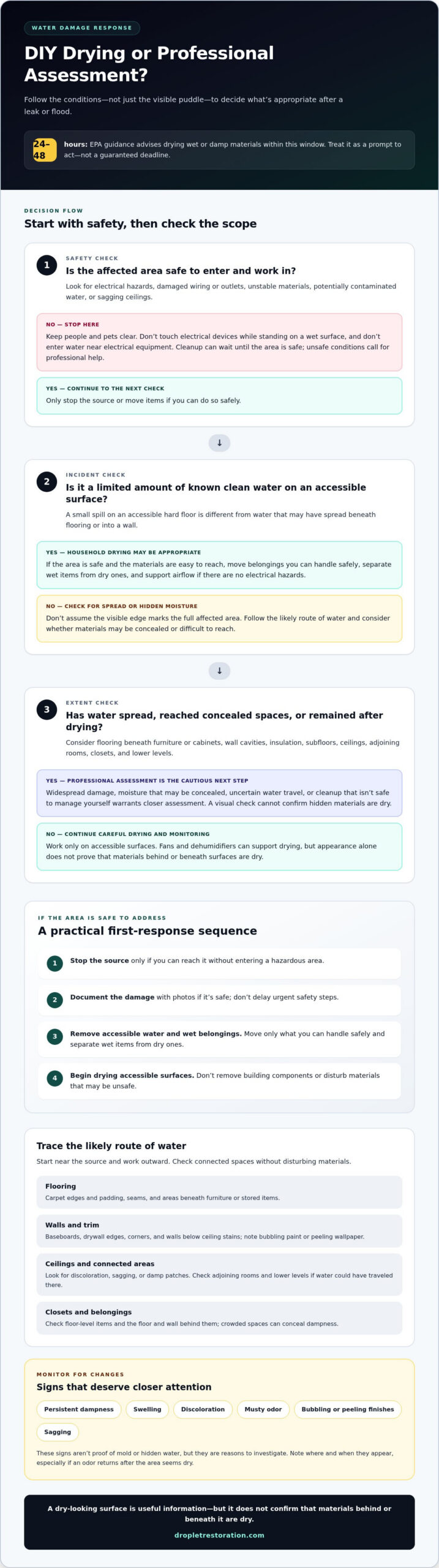
DIY drying or professional assessment: how to judge the difference
Choose your next step based on more than the amount of visible water. A small spill from a known clean-water source may be manageable if the area is safe and materials are easy to reach. Water that has spread, entered concealed spaces, or remains after your drying efforts calls for a more cautious response.
Consider the location and extent of wet materials. A damp, movable rug is different from flooring that may be wet beneath cabinets or inside a wall cavity. If you can’t tell where the water went, don’t assume the visible edge marks the full affected area.
When careful household drying may be appropriate
DIY drying may suit a limited incident, such as a small amount of water from a known source on an accessible hard floor. Move belongings that are safe to lift, separate wet items from dry ones, and support airflow if doing so won’t expose you to electrical hazards. Don’t pry up flooring or remove wall materials to inspect underneath.
Reassess as the area dries. If dampness persists, damage appears to spread, or a musty odor continues or returns, pause and consider a professional assessment. Odor can signal a moisture concern, but it doesn’t identify the cause on its own.
When to stop and seek trained help
Get trained help if water may have entered wall cavities, insulation, or subfloors; reached multiple rooms; or affected materials you can’t safely access. Do the same if the water’s source is unknown or contamination is suspected. Avoid touching or disturbing questionable water or materials, and keep people away if you’re unsure the area is safe.
Visible mold is also a reason to seek mold remediation guidance, especially if it covers a broad area or appears on materials that are difficult to clean safely. Don’t identify mold by color or odor alone. Those clues can help describe what you see, but they can’t confirm the type of growth or show how far moisture has traveled. During an assessment, describe the water source, affected rooms, and changes you’ve noticed.
The scope and location of wet materials guide the next step. Household drying may support recovery in a small, accessible area. Concealed, widespread, persistent, or potentially contaminated water needs closer assessment. Stop if the work feels unsafe or requires opening building materials. Protecting people comes before cleanup.
A practical drying and monitoring plan after water damage
A steady drying plan helps you track what you’ve handled and what still needs attention. Work only in areas you can access safely, and don’t use electrical equipment where water or damaged wiring could create a hazard. Follow each device’s instructions. If water may be contaminated or the affected area is extensive, pause and seek professional guidance before moving air or belongings around.
For a manageable, accessible area, use this sequence:
- Remove accessible water. Use suitable household tools only where it’s safe. Don’t enter standing water if electrical hazards or contamination may be present.
- Separate wet belongings. Move items only if they’re safe to handle. Keep damp belongings apart from dry ones and note where they were stored.
- Support drying. Use airflow and dehumidification only when the area and equipment can be managed safely. These tools don’t verify moisture inside walls, floors, or other concealed materials.
- Reassess the affected area. Check the same locations again and record dampness, new staining, odor, or changes in materials. Escalate if moisture persists or the affected area is larger than it first appeared.
Use airflow and dehumidification carefully
Air movement helps moisture evaporate from exposed surfaces. A dehumidifier removes moisture from the air and supports drying. Neither tool shows whether a wall cavity, subfloor, or other hidden material is dry. Keep equipment away from wet electrical areas and follow the manufacturer’s instructions. If mold or contaminated materials are suspected, don’t direct airflow across them, since it may spread particles.
Don’t force a DIY setup in a large or difficult-to-dry space. Water that has crossed multiple rooms, entered concealed areas, or affected materials you can’t safely reach may need professional assessment to establish the extent of moisture and the right drying approach.
Track drying instead of relying on a quick visual check
Keep a simple log of affected locations, what you observe, and whether each spot changes. Note the date of each check, recurring odor, fresh staining, dampness, and which belongings or materials remain affected. Photos taken from the same position can help compare visible changes, but they don’t measure moisture inside building materials.
Recheck flooring near baseboards, the edges of affected rooms, and stored items you moved. Don’t declare materials dry based only on appearance, touch, or time. If you can’t confirm the area is drying or hidden moisture remains a concern, arrange a water damage assessment with Droplet Restoration. Preventing mold after water damage means tracking the full affected area, not just the first visible signs.
When Vancouver-area water damage needs professional support
Some water incidents are too extensive, hidden, or unsafe to manage with household drying alone. Arrange professional help if water has entered concealed materials, spread across multiple rooms, or reached an area you can’t safely access. Persistent dampness, new staining, or drying that isn’t progressing are also reasons to escalate. If you suspect moisture remains in the structure, don’t wait for visible mold before taking action.
Stay clear of electrical hazards, unstable materials, and water that may be contaminated. If you can’t confirm the area is safe, step away and arrange an assessment. A restoration team can help determine the extent of the damage and guide mitigation when affected materials are difficult to locate or dry.
What restoration support can add
Droplet Restoration provides water damage restoration in Vancouver, Washington, and nearby communities: Battle Ground, Camas, Ridgefield, La Center, Longview, Kelso, Woodland, Castle Rock, and Kalama. Its IICRC-certified technicians assess water damage and begin mitigation and recovery. Droplet works directly with all insurance providers to help streamline the claims process. An assessment can help clarify the water’s path and next steps when drying efforts aren’t resolving persistent moisture.
Take the next step without delaying mitigation
Droplet Restoration provides 24/7 emergency water damage restoration. Its technicians respond within 90 minutes to mitigate damage and begin recovery. If your home has active or extensive water damage, arrange an assessment promptly rather than relying on visible surfaces to judge the full extent. Share where the water entered, which rooms are affected, and what you’ve observed.
Keep people away from unsafe areas and avoid disturbing materials you can’t handle safely. Addressing hidden or persistent moisture is an important part of how to prevent mold after water damage, and an assessment can help establish what needs attention.
Get help with water damage restoration to assess and mitigate the damage.
Protect your home with a clear next step
Water damage can leave questions that aren’t easy to answer by sight alone. If you’re unsure whether affected materials are fully dry, a timely assessment can help clarify what needs attention and the next steps toward recovery.
Knowing how to prevent mold after water damage means responding to visible water and recognizing when hidden moisture needs experienced support. If water is still affecting your home or you’re concerned about damp materials, take the next step with a team that handles water damage restoration.
Arrange water damage restoration support with Droplet Restoration.
Frequently Asked Questions
Can mold grow behind drywall after a small water leak?
Yes. Water from a small leak can travel behind drywall or beneath trim. Watch for persistent dampness, swelling, staining, or recurring odor. If the wall stays wet, arrange an assessment rather than assuming the surface tells the whole story.
Should I use bleach to prevent mold after water damage?
No. Bleach won’t address the moisture source, and mixing cleaners can create hazards. Focus on safe drying first. If mold is visible, contamination is suspected, or the affected area is extensive, avoid disturbing it and seek qualified help.
Is it safe to use a household fan after water damage?
Only if the area is safe and the water source is known. Airflow may spread contaminants if mold or polluted water is involved. Keep electrical equipment away from wet conditions, follow its instructions, and get guidance if water reached concealed spaces or several rooms.
What should I do if water reached my HVAC system?
Stop using the system if water may have reached its equipment, ducts, or electrical components. Don’t open or clean affected parts yourself. Note what became wet and arrange qualified guidance before restarting the system.
Does homeowners insurance cover mold after water damage?
Coverage depends on your policy and the circumstances of the loss. Document the damage and your mitigation steps, then ask your insurer about your specific policy. Droplet Restoration works directly with all insurance providers to help streamline claims.
When should I throw away items soaked by water?
Consider the item’s material, the water source, and whether it can be cleaned and fully dried. Keep uncertain belongings separate, document damage, and use extra caution with items exposed to unknown or contaminated water. For extensive losses, seek restoration guidance.
