
What if wiping away visible mold solves only the part you can see? Mold remediation goes beyond surface cleaning. It addresses affected materials and the moisture that allowed growth to develop, helping reduce the chance it will return. A patch on a wall can leave property owners wondering whether there’s a larger leak or damp area behind it, and whether cleanup is safe to handle alone.
That uncertainty is understandable. The right next step depends on the size and location of the growth, whether it keeps coming back, and whether water damage is involved. This guide explains mold remediation in plain language, outlines practical first steps, and helps you recognize when professional support may be appropriate.
You’ll learn why moisture control matters, what to consider before cleaning a small affected area, and when a recurring or extensive problem calls for a more thorough response. For property owners in Vancouver, Washington, Droplet Restoration provides mold removal and restoration support through IICRC-certified technicians and works directly with insurance providers. Addressing the source, not just the visible growth, is key to a lasting cleanup.
Key Takeaways
- Mold remediation manages affected growth and contributing conditions. It doesn’t promise to remove every naturally occurring mold spore.
- Use the EPA’s roughly 10-square-foot guidance as context, not a universal DIY cutoff. Recurring growth, water damage, or uncertainty may call for professional help.
- A response may involve assessing the area, limiting spread, addressing affected materials, and resolving moisture. The work should fit the property and conditions.
- In Vancouver, WA, Droplet Restoration provides local mold removal and restoration support for property owners facing extensive or recurring growth.
What Mold Remediation Means, and What It Does Not
Mold remediation is the process of managing mold growth, addressing affected materials, and correcting the conditions that allow it to develop. It focuses on unwanted growth and the moisture problem, not on removing every mold spore. Mold spores occur naturally in the environment, so a practical goal is to address visible growth and reduce the chance it will return.
This distinction helps make sense of what you see. A discolored patch may be limited to a surface, or it may point to damp materials or water intrusion nearby. Appearance alone doesn’t reveal the full extent. A careful response considers the affected area and what could be keeping it damp before deciding what cleanup may involve. For a broader overview of common approaches, see Mold Remediation on Wikipedia.
How mold remediation differs from surface cleaning
Wiping visible growth can remove what’s on the surface, but it won’t fix a leak behind a wall, dampness beneath flooring, or another unresolved source of moisture. If the underlying condition remains, growth may reappear. Remediation is broader than cleaning what’s visible: it considers where growth is present, whether materials are affected, and what conditions need attention.
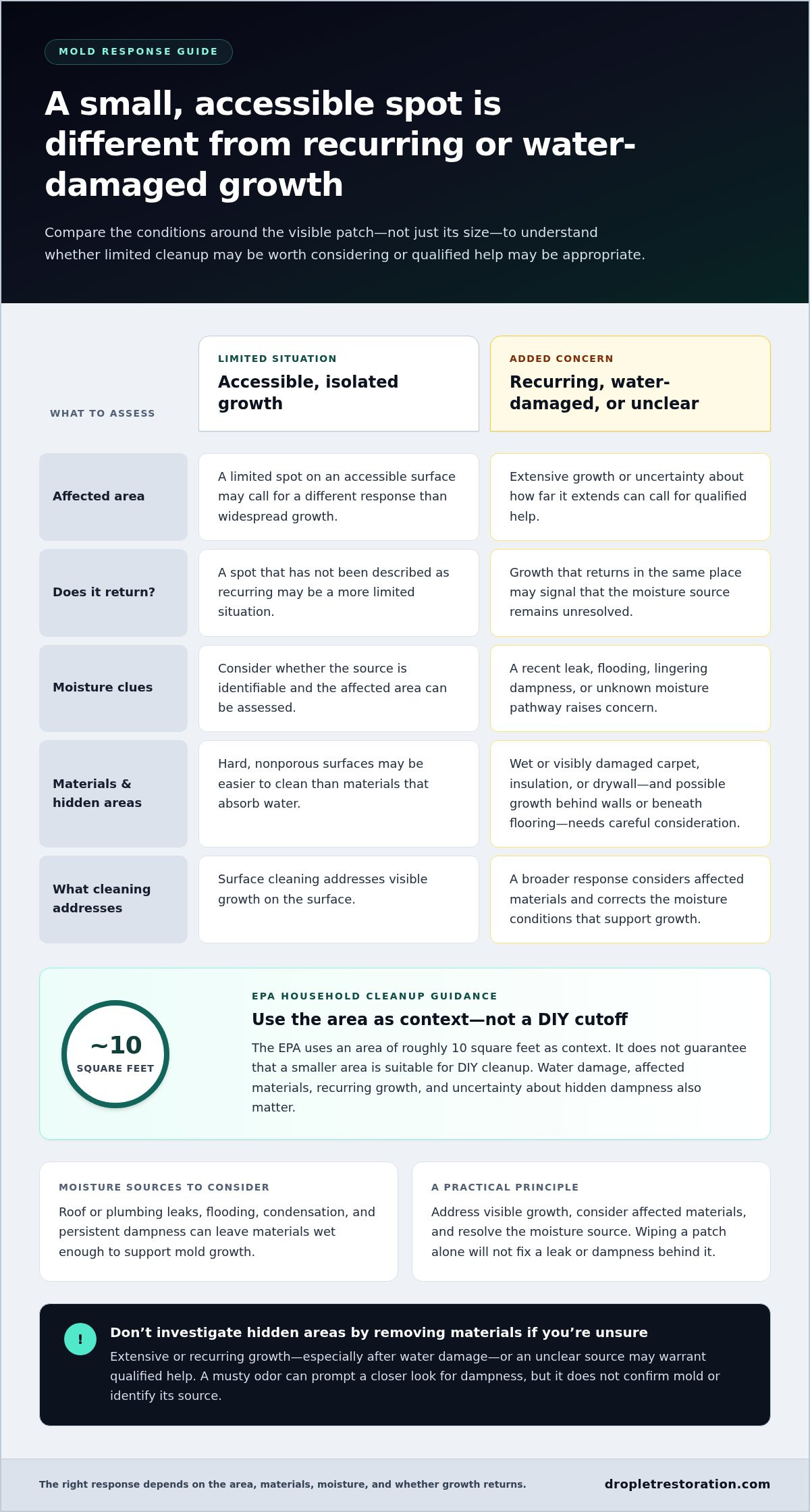
That doesn’t mean every small patch requires professional work. The suitable response depends on the size and location of the affected area, whether it keeps returning, and whether there’s a known water problem. A limited spot on an accessible surface is different from growth that appears after flooding or returns despite cleaning. If you can’t identify the cause, don’t assume the visible mark is the whole problem.
Why moisture is central to mold growth
Mold needs moisture to grow. A roof or plumbing leak, flooding, condensation, or persistent dampness can leave surfaces and materials wet enough to support growth. Cleaning the visible area without drying or correcting the source may only provide a temporary fix. Include finding and addressing the moisture pathway in the response.
Look for clues around the affected spot: a recent leak, water staining, dampness that lingers, or growth that returns in the same place. These observations don’t prove what’s hidden inside a wall or under a floor, but they can help you recognize when surface cleaning may not be enough. Don’t remove building materials to investigate if you’re unsure. Extensive or recurring growth, especially after water damage, is a reason to seek qualified help.
The core idea is straightforward: manage the growth, consider affected materials, and resolve the moisture that supports it. This gives you a clearer basis for deciding what to do next without assuming every mark needs the same response.
How Moisture, Materials, and Time Shape a Mold Problem
The visible patch is only one part of the picture. How long an area has stayed damp, what materials got wet, and whether water reached a hidden space all affect the response. A small mark on a bathroom surface may call for a different approach than growth near a recurring leak or after flooding.
Act promptly. The longer materials stay damp, the more opportunity mold has to develop.
Where moisture-related growth may appear
Bathrooms, basements, and kitchens often have moisture sources such as plumbing, condensation, or limited ventilation. Growth may also appear near a roof leak, beneath a window, or along a wall affected by water intrusion. A visible spot doesn’t necessarily show how far dampness extends. Water can reach behind a wall or beneath flooring before signs appear on the surface.
A musty odor can be a reason to look for dampness, but it doesn’t confirm that mold is present or identify its source. Note where and when you notice it, then look for visible staining, recent leaks, or areas that remain damp. Don’t assume the nearest visible mark explains every sign of moisture.
Why the affected material changes the cleanup approach
Material matters. A hard, nonporous surface may be easier to clean than a porous material that absorbs water. If carpet, insulation, or drywall has been wet or visibly damaged, the condition and extent of exposure matter. The same surface treatment may not suit every material. Don’t assume all affected items can be cleaned in the same way.
Consider the full context before deciding what to do: where water came from, whether it reached concealed areas, how long the material remained damp, and whether growth has returned. These details help distinguish a limited, accessible cleanup from a larger moisture problem that may need professional assessment. If the extent is unclear or water damage is involved, qualified help can clarify what the property needs.
The U.S. Environmental Protection Agency (EPA) uses an area of roughly 10 square feet as context in its household mold-cleanup guidance. That figure is not a universal safety cutoff or a guarantee that a smaller area is suitable for DIY cleanup. Water damage, affected materials, and uncertainty about hidden dampness also matter. Use the area as one consideration, not the only measure of the situation.
If mold growth is connected to water damage in your Vancouver, Washington, property, Droplet Restoration’s mold removal support can help address the restoration needs.
When Is DIY Cleanup Reasonable, and When Should You Seek Help?
Deciding what to do depends on more than the size of a visible patch. Consider how much area is affected, whether the growth returns, whether water damage is involved, and whether you can identify the source. A limited spot on an accessible surface may be manageable to clean if the moisture issue is resolved. If the situation is unclear, pause before disturbing the area and get a qualified assessment.
The U.S. Environmental Protection Agency (EPA) offers cleanup guidance for moldy areas smaller than about 10 square feet. Treat that as general information, not a universal boundary between safe DIY cleanup and professional work. A smaller area can still raise questions if it follows water damage or appears connected to a hidden leak. A larger affected area deserves a response based on the property and conditions, not a number alone.
Situations that may warrant professional assessment
Consider professional help if growth is widespread, returns after cleaning, or follows substantial water damage. Use added caution if you suspect the issue may be near an HVAC system, where the affected area may be difficult to judge from visible signs alone. If you can’t identify the moisture source or tell how far the problem extends, arrange an assessment rather than guessing.
These signs don’t confirm what is behind a wall or inside a system. They do indicate that surface cleanup may not answer the main question: what is affected, and what conditions need attention? Professional mold remediation can help assess the situation and shape a response to the observed extent and water damage.
What to do before cleanup begins
Take a few practical steps first. Don’t put yourself at risk to reach a leak or enter a damaged area. If it’s safe, stop an active water source; otherwise, keep clear and arrange appropriate help. Where practical, keep people away from visibly affected areas while you decide on the next step.
- Photograph visible growth, staining, and nearby water damage for your records.
- Note when you first noticed the problem and whether it has returned after cleaning.
- Record any known leak or water event, including the affected rooms and materials.
Clear documentation can help you explain what you observed during an insurance discussion. Avoid scraping, cutting into walls, or moving damaged materials to investigate if you don’t know what lies behind them. If the area is extensive, growth has recurred, water damage is substantial, or the source remains uncertain, leave the cleanup decision to qualified professionals. A measured assessment can establish a clear next step without assuming every spot needs the same response.
What a Mold Remediation Response Typically Addresses
A professional response is guided by the property, visible conditions, and water history. It isn’t a fixed checklist where every home receives identical work. The purpose of mold remediation is to understand the affected area, manage the work, address impacted materials, and deal with the moisture conditions behind the growth. The steps below offer a high-level view, not a promise that every project follows the same plan.
- Assess the situation. The response begins by considering visible growth, known leaks or water events, and which parts of the property may be affected. A mark on one wall may not show whether nearby materials were also exposed. The assessment helps establish the scope of the work and identify questions that need attention before cleanup proceeds.
- Limit the spread during work. Professionals may use containment to help keep mold or debris from spreading into other areas while they work. The need and approach depend on conditions at the property. Containment is a work-control measure, not evidence that every project needs the same setup or that it addresses the moisture source.
- Address affected materials and belongings. Cleanup may involve surfaces, building materials, or belongings, depending on their condition and the extent of the impact. Materials respond differently to moisture, so the appropriate action depends on what was affected. The goal is to deal with the impacted area thoughtfully, rather than treat every item or surface the same way.
- Resolve the moisture issue and determine restoration needs. A leak, water intrusion, or persistent dampness needs attention as part of the overall response. Otherwise, the conditions that supported growth may remain. Once cleanup and moisture concerns are addressed, any restoration work depends on the damage and project scope. The affected space and materials guide what comes next.
These stages connect, but they don’t always happen in a simple, identical sequence. Information found during assessment can change the scope; the condition of materials can shape cleanup; and the water source may need attention alongside mold removal. A limited issue and one involving water damage may call for different responses. The process should fit the observed conditions, not an assumed template.
For property owners, the useful question is whether the response accounts for both the visible growth and the conditions around it. A thorough plan considers what’s affected, how work can be managed, and what moisture issue needs to be resolved. That provides a clearer path from assessment through cleanup and restoration.
If you’re dealing with mold growth or water damage in Vancouver, Washington, schedule a mold inspection with Droplet Restoration to discuss the property’s restoration needs.
Mold Remediation in Vancouver, WA: Local Help and Practical Next Steps
For property owners in Vancouver, Washington, mold growth can raise immediate questions: Is moisture still entering the home? Are materials behind the visible area affected? What should happen next? A local restoration team can assess the situation and help plan a response based on the property, the extent of growth, and any related water damage.
Droplet Restoration provides mold removal and restoration support in Vancouver and nearby communities, including Battle Ground, Camas, Ridgefield, La Center, Longview, Kelso, Woodland, Castle Rock, and Kalama. Its IICRC-certified technicians respond within 90 minutes to mitigate damage and begin the recovery process. If growth is extensive, keeps returning, or follows water damage, professional support can help clarify the affected area and practical next steps.
What local property owners can prepare
A few details can make it easier to describe what you’re seeing. Note when you first noticed the growth and whether it has changed or returned. Record any known leak, flood, or persistent dampness, including which rooms or materials were affected. Take photographs of visible damage for your own records or an insurance discussion.
These notes can provide useful context, but they aren’t a substitute for professional assessment. Don’t delay addressing an active water source just to gather information, and don’t enter an area that feels unsafe. If you can’t identify where moisture is coming from or how far it has spread, leave the investigation to qualified professionals.
How Droplet Restoration can support the next step
Each property presents different conditions. A clear account of what happened, along with visible signs and water history, helps establish a starting point for mold remediation. Droplet Restoration supports local property owners with mold removal and related restoration needs, including situations where growth is recurring or connected to water damage. The response can be shaped around the conditions found at the property rather than assuming every cleanup follows the same steps.
Keep your notes and photos together so the information is easy to share during an inspection. If you’re unsure whether visible growth is part of a larger moisture problem, an inspection can help clarify what needs attention. The aim is to move from uncertainty to a practical plan for the affected area and the conditions contributing to it.
For local support, schedule an inspection with Droplet Restoration. A focused assessment can help you understand the next step and begin addressing the property’s mold and moisture concerns.
Take the Next Step Toward a Clear Plan
Uncertainty can linger when you can’t tell whether visible growth is limited or connected to a wider property issue. You don’t need to settle that question alone. A professional assessment can help clarify the situation and identify a practical path forward, so you can make decisions with better information.
For property owners in Vancouver, Droplet Restoration provides mold removal and restoration support. Its IICRC-certified technicians can assess the property, and the company works directly with insurance providers. If you’re weighing what to do next, an inspection is a straightforward way to move from concern to action.
Schedule an inspection to discuss your property’s mold remediation needs. Taking the next step can help you regain clarity and move toward a well-managed recovery.
Frequently Asked Questions
What is the difference between mold removal and mold remediation?
Mold removal usually refers to taking away visible growth. Mold remediation describes the broader work to manage a mold problem. Ask what the planned work covers, including whether it considers affected areas and contributing moisture, rather than relying on the service label alone.
Can mold come back after remediation?
Yes. Growth may return if moisture remains or a new leak develops. If you notice it again, record where it appears and any changes in the area. That information can help identify whether the original moisture issue persists or a new one has emerged.
How quickly can mold start growing after water damage?
Mold may begin growing within 24 to 48 hours when materials remain wet, according to U.S. Environmental Protection Agency guidance. Timing depends on conditions, so it isn’t a guaranteed deadline. Address water promptly rather than waiting for visible growth.
Is a mold test always needed before remediation?
No. Testing isn’t automatically necessary in every situation. Visible conditions and the property’s water history can help guide next steps. Testing may be useful when there’s a specific question, but it won’t fix a leak or dry damp materials.
When should I call a professional for mold remediation?
Seek qualified help for widespread or recurring growth, substantial water damage, suspected growth near an HVAC system, or an unclear source. These situations can make it difficult to understand the extent of the problem through a surface-level check alone.
Does homeowners insurance cover mold remediation?
Coverage depends on your policy and the cause of the damage. Review your policy and contact your insurer about your specific situation. Keep photos, dates, and notes about known leaks or water events to support the discussion.
