
What if the water you can see is only a small part of the damage? After a leak or flood, wet floors may be obvious, but moisture can also remain behind walls, beneath flooring, and inside other building materials. The water damage restoration process is more than pumping out water and wiping surfaces. It involves assessing affected areas, removing water, and monitoring drying.
It’s understandable to wonder what happens next, how disruptive the work will be, and whether hidden moisture could be missed. Restoration technicians assess and document conditions, explain their findings, and provide updates as work progresses. Droplet Restoration also works directly with insurance providers to support coordination during the process, while coverage decisions remain with the insurer.
This guide walks through each stage, from initial assessment and water removal to moisture monitoring, drying, and restoration. You’ll learn what technicians look for, what decisions and updates to expect, and how documentation can help you stay organized while your property moves toward recovery.
Key Takeaways
- The water damage restoration process follows an orderly sequence, with the work tailored to the affected property and conditions.
- Technicians assess visible damage and look for signs that moisture has spread before setting mitigation priorities.
- Drying progress and repeat moisture checks help determine when the next stage can begin.
- Immediate mitigation differs from later recovery decisions, which depend on what assessment and drying reveal.
- Droplet Restoration guides property owners in Vancouver, Washington, and nearby communities, and helps coordinate information with insurance providers.
What the Water Damage Restoration Process Includes
Water damage restoration follows an orderly sequence, but the work plan needs to fit the property and the conditions on site. A leak in one room may affect the flooring and the wall below it. Water from an upper floor can reach ceilings or neighboring rooms. A clear sequence helps property owners understand what’s happening and why visible cleanup is only one part of the response.
The water damage restoration process is a property-specific sequence of assessment, mitigation, water and moisture removal, drying, and recovery planning. Each stage guides the next, based on what the team finds and how affected materials respond.
Restoration involves more than removing standing water. The team identifies the source and extent of the damage, takes steps to limit further spread, and evaluates where moisture may have traveled. The Water damage overview describes common causes and effects. At a property, professionals use an on-site assessment to determine what work is appropriate and connect immediate mitigation with the drying and recovery decisions that follow.
How restoration differs from basic water cleanup
Basic cleanup focuses on water you can see. Restoration also accounts for moisture that may be held in flooring, wall materials, or ceilings. A floor may look nearly dry while dampness remains underneath. A ceiling stain may signal that water has moved beyond the visible mark. Removing surface water alone may not address those conditions. For practical guidance on safe cleanup steps, see what to avoid during water damage cleanup.
Mitigation is the early work to limit ongoing damage, such as addressing active water and removing standing water where appropriate. Restoration includes that response, along with assessment, drying, and planning next steps. A clean-looking surface doesn’t automatically mean affected materials are dry or ready for recovery work.
What can change the restoration sequence?
The source and location of the water shape the initial assessment. A plumbing leak in a bathroom can affect different rooms and materials than water entering through a roof and reaching a ceiling or wall. Technicians also consider how far moisture may have spread, which materials are involved, and whether those areas are accessible for evaluation and drying.
Those findings can change the order or scope of work. The team may need to investigate beyond the visibly wet area, then reassess as drying progresses. The sequence follows site conditions, not a fixed checklist or promised completion date. Clear updates help you understand what the team has found and why the plan may change.
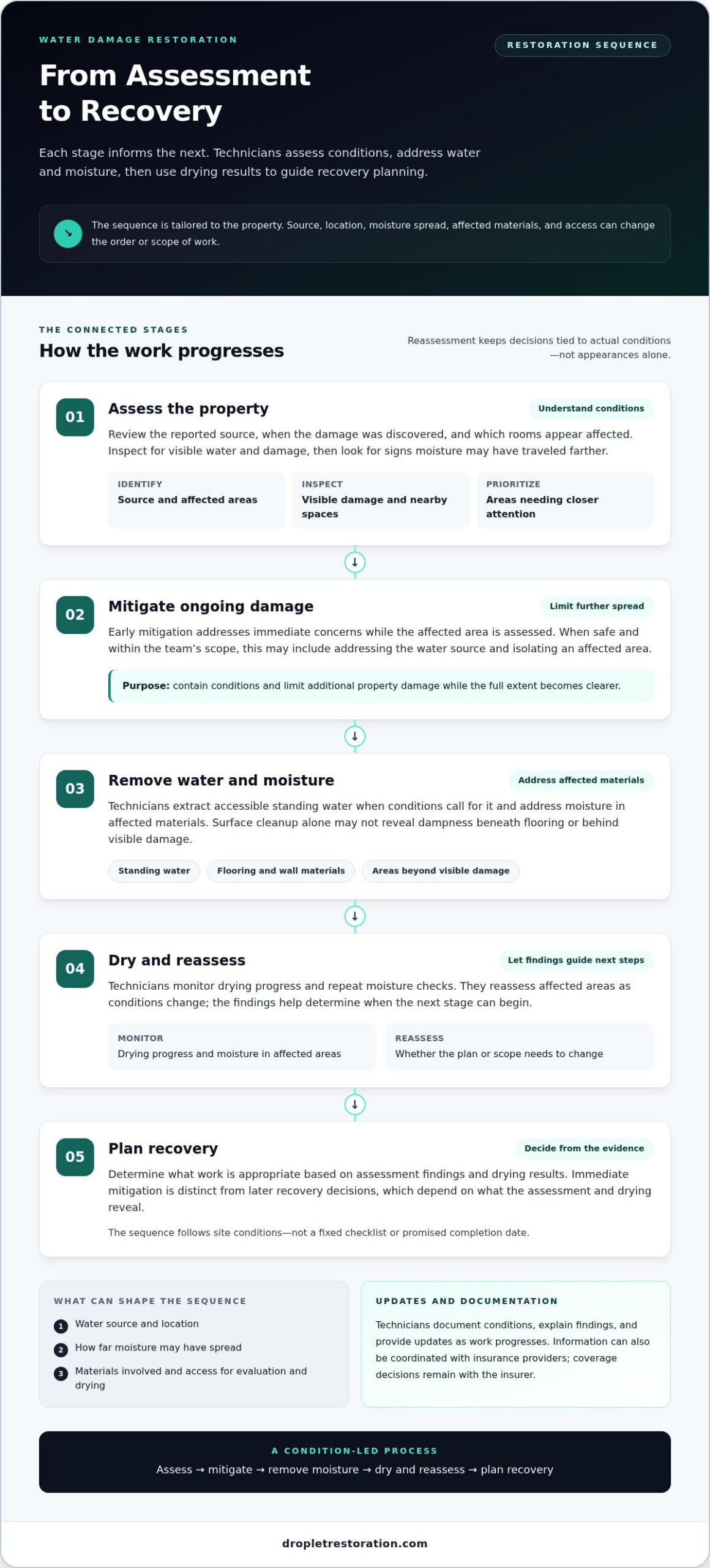
In practical terms, expect the work to move through these connected stages:
- Assess: Identify the water source, affected areas, and visible damage.
- Mitigate: Address active water and limit further spread.
- Remove moisture: Extract standing water and address moisture in affected materials.
- Dry and reassess: Monitor conditions and use the findings to guide next steps.
- Plan recovery: Determine what work is appropriate based on the assessment and drying results.
Knowing the sequence gives you a useful frame for the work ahead. The exact steps depend on the property, and reassessment keeps decisions tied to actual conditions rather than appearances alone.
Assessment and Mitigation: How Teams Contain Water Damage
Assessment turns a confusing scene into a prioritized work plan. Technicians review what you’ve noticed, inspect affected spaces, and look for visible damage and signs that moisture may have traveled farther. They use those findings to decide which mitigation actions are appropriate. The sequence is deliberate: understand the conditions, address immediate concerns, then contain and remove water where needed.
Early mitigation aims to limit additional property damage while the full extent of the affected area is assessed.
What happens during the initial property assessment?
Technicians start by reviewing the reported source, when the damage was discovered, and which rooms appear affected. They inspect those spaces for visible water and damage, then consider how moisture might have moved into nearby areas or building materials. The goal is to establish what is known, identify areas that need closer attention, and set priorities for the response.
The assessment guides a property-specific plan. It doesn’t mean every repair detail or completion date is settled at the outset. Conditions may become clearer as mitigation proceeds. If you notice a new wet area or remember that another room was affected, share that information so the team can reassess the scope.
How water extraction and containment fit into mitigation
Once immediate concerns are understood, technicians can take suitable steps to limit further spread. If water is still entering, the team may address its source when it is safe and within its scope. Extraction removes accessible standing water when conditions call for it. Teams may also isolate an affected area to manage equipment, work activity, and movement through the property.
Keep clear of standing water if there may be an electrical hazard. Don’t try to operate electrical equipment or enter an unsafe area. Leave those conditions for qualified responders to assess. For cleanup questions involving mold, the EPA guidelines for mold cleanup explain why addressing moisture is an important part of managing affected spaces.
In practical terms, the initial response generally follows these ordered steps:
- Review: Share your observations about the source, timing, and affected rooms.
- Inspect: Examine visible damage and identify areas where moisture may have migrated.
- Prioritize: Use the findings to determine immediate containment and mitigation needs.
- Address the source: Limit ongoing water entry when it’s safe and within the team’s scope.
- Extract and contain: Remove accessible standing water when needed and manage the affected work area.
These actions establish control, but they don’t answer every question about what lies beneath a surface or how materials will respond. Assessment and mitigation findings inform the next stage, including which areas need further moisture evaluation. For property owners in Vancouver and nearby communities, water damage restoration support can bring structure to those first decisions.
Drying, Cleaning, and Monitoring: Why One Visit May Not Be Enough
A floor or wall can look dry while moisture remains inside or beneath the surface. That’s why drying doesn’t end with removing visible water. Technicians assess affected materials, use professional drying methods, and check conditions again as work progresses. A return visit can provide important information. It doesn’t necessarily mean the response has stalled.
Monitored drying matters because repeat checks help show whether affected materials are drying and guide decisions about what should happen next. Appearance alone can’t confirm that hidden moisture has been addressed.
What professional drying is meant to accomplish
Water can be absorbed into flooring, wall materials, and other building components. Professional drying aims to address that retained moisture, not just puddles or damp surfaces. Depending on the property and affected areas, technicians may use drying equipment to circulate air and manage moisture in the environment.
The approach depends on what was affected and how accessible it is. A damp area on an open floor may be easier to evaluate than moisture inside a wall or beneath a finished surface. Site conditions guide where drying is needed and whether further assessment is appropriate. There isn’t one fixed setup or duration for every property.
How monitoring guides the next decision
Drying is an active stage, not a set-and-forget step. Technicians return to reassess conditions and check affected materials. They compare observations over time and use moisture checks to judge whether drying is progressing or the plan needs to change. Those findings help determine whether work can move forward or more drying or evaluation is needed.
This is one reason a single visit may not be enough. Equipment may need to remain in place while materials continue to dry, and follow-up checks help keep decisions grounded in current conditions. The water damage restoration process moves forward based on findings, not simply because a surface feels dry.
Cleaning affected areas as conditions allow
Cleaning depends on the type of damage and the materials involved. Technicians may clean affected surfaces as part of the work, using a method suited to what was exposed and what can be safely addressed. Cleaning visible residue doesn’t replace drying, and drying doesn’t automatically answer every question about a material’s condition. Each task has a distinct purpose.
Managing moisture promptly can help reduce conditions that support mold growth, but no drying approach can guarantee mold will not develop. Continue to address moisture concerns as part of the restoration work, and ask the team to explain what its checks show in the affected areas.
Expect updates as the team reassesses the affected areas. Ask what the latest checks show and how those findings shape the next stage. That conversation can clarify why equipment remains in place, why another check is needed, or when the work is ready to advance.
From Drying to Recovery: Documentation, Decisions, and Property Updates
Once mitigation and drying are underway, attention shifts to what the findings mean for the next stage. Keep a clear record as work progresses. Dated photos, written updates, and saved communications can help you follow the work and share relevant information with your insurer. They also make it easier to see how decisions connect to your property’s condition.
Mitigation and recovery are related, but they serve different purposes. Mitigation addresses immediate damage and affected conditions. Later recovery decisions depend on what the assessment, cleaning, and drying reveal. The work isn’t a one-size-fits-all checklist, and visible damage alone may not determine the next scope.
| Mitigation activities | Later recovery decisions |
|---|---|
| Addressing active water intrusion when safe and within scope | Determining which damaged materials need further restoration |
| Removing accessible water and managing affected areas | Using drying and cleaning findings to plan appropriate next work |
| Recording conditions and progress during mitigation | Reviewing the documented findings to establish the recovery scope |
What property owners can document during the process
Keep your records simple and organized. If it’s safe to do so, take dated photos of visible damage before and during the work. Save written updates from the restoration team, relevant receipts, and communications with your insurer. Note when you took each photo or received an update so the sequence remains clear. For more guidance on avoiding water damage cleanup mistakes, review what to protect and record after water damage.
Documentation can support communication, but it doesn’t determine what an insurance policy covers. Droplet Restoration works directly with insurance providers to help coordinate information during restoration. That support doesn’t guarantee coverage or claim approval. For policy-specific decisions, rely on your insurer’s guidance.
How mitigation transitions into property recovery
Drying and cleaning findings help shape the next decisions. If materials remain affected, the recovery scope may need to account for them. If conditions show the work can advance, the team can explain what comes next. This is damage-related restoration, guided by the assessment and the condition of the affected property. It’s distinct from unrelated remodeling or renovation, which isn’t automatically part of a damage-restoration scope.
Keep track of what has been completed, what the team has found, and which decisions remain. If your insurer requests records, organized photos and communications can help you provide relevant information.
A steady record helps make restoration decisions easier to follow as work moves from mitigation toward recovery. If water damage has affected your property, schedule water damage restoration support with Droplet Restoration.
The Water Damage Restoration Process With Droplet in Vancouver, WA
Water damage can disrupt a home or business quickly. Droplet Restoration guides property owners through clear stages, from assessing affected areas to mitigation and monitored drying. The goal is to explain what the team finds, what happens next, and how the work plan responds to the property’s actual conditions.
Droplet provides 24/7 emergency water damage restoration with IICRC-certified technicians. The company states that technicians respond within 90 minutes. This is a stated response time, not a guarantee of arrival within that period.
What to expect from a local restoration response
The first step is understanding what happened and which parts of the property may be affected. Technicians assess visible damage and consider where water may have moved, then determine appropriate mitigation steps. As work progresses, drying checks help show whether the plan should continue or adjust to new findings.
That sequence gives you practical points to follow: what the team has assessed, which mitigation actions are underway, and what drying results indicate. Recovery decisions depend on those findings, so the work can be tailored rather than forced into a preset checklist.
Droplet works directly with insurance providers to support coordination during restoration. Keep track of updates and share relevant information as needed, while remembering that the insurer makes coverage and claim decisions. Coordination can help organize communication, but it doesn’t promise that a claim will be approved.
Droplet serves Vancouver, Washington, and nearby communities, including Battle Ground, Camas, Ridgefield, La Center, Longview, Kelso, Woodland, Castle Rock, and Kalama. A local response team can help property owners understand how assessment, mitigation, and drying fit together, without leaving them to guess what each stage means.
When to contact Droplet Restoration
Contact Droplet when water damage is active or has affected your property. Don’t enter standing water if there may be an electrical hazard. Move away from unsafe areas and leave the assessment to qualified responders.
As the water damage restoration process moves forward, expect the team to explain what it has found and how those findings shape the next step. Share what you know about the source and affected rooms, and keep relevant updates together so you can refer to them during the work.
If water damage needs attention at your home or business, contact Droplet Restoration for water damage help.
Take the Next Step Toward Recovery
Water damage can leave you facing urgent decisions, but you don’t have to make sense of every detail at once. Focus on the next safe step and keep communication clear as work progresses. Understanding the water damage restoration process can help you know what to expect, ask informed questions, and stay involved in decisions about your property.
If water is still affecting your home or business, act promptly. Stay out of hazardous areas, especially where standing water may pose an electrical risk. A restoration team can assess the conditions and explain an appropriate path forward, so you can focus on protecting people and keeping essential information organized.
Droplet Restoration provides emergency water damage restoration and works with property owners through mitigation and recovery planning. Get help with water damage restoration and take the next step with a team ready to bring clarity to a difficult situation. With a clear plan and steady guidance, recovery can move forward one decision at a time.
Frequently Asked Questions
What are the steps in the water damage restoration process?
The water damage restoration process generally moves from inspection to mitigation, water removal, drying, cleaning, and recovery planning. The order can change if technicians find a continuing leak, additional affected rooms, or materials that need closer evaluation. For example, a leak under a sink may affect the cabinet and nearby flooring, not just the visible puddle. Ask the team to explain the next step and what finding led to it.
How long does the water damage restoration process take?
There isn’t one reliable duration for every property. The schedule depends on how much water entered, which rooms and materials were affected, how accessible damp areas are, and what follow-up checks show. A small, accessible area may require a different plan from water that has spread under flooring or into enclosed spaces. Ask for updates as conditions are reassessed instead of relying on a timeline before affected materials have been evaluated.
Does water damage restoration include drying inside walls and floors?
It can include addressing moisture inside affected walls or flooring when the assessment indicates it’s present. A dry-looking surface doesn’t tell you what’s happening behind or underneath it. Ask which areas were evaluated and whether hidden sections need further checking before they’re covered or returned to normal use. The team’s findings help determine what drying work is appropriate for the materials and access conditions in your home.
Can I stay in my home during water damage restoration?
Possibly, but it depends on the affected areas and whether they can be safely separated from the rest of the home. A contained issue in one room may have a different impact than damage affecting essential spaces or creating an electrical or other safety concern. Ask the restoration team which areas should remain off-limits and how equipment or work activity may affect access. Stay away from standing water if an electrical hazard may be present.
Will my insurance cover the water damage restoration process?
Coverage depends on your policy and the cause of the damage. Sudden, accidental indoor water damage may be treated differently from gradual leaks or flooding from outside, so don’t assume every situation has the same outcome. Your insurer makes the coverage decision. Droplet Restoration works directly with insurance providers to coordinate information, but that support doesn’t guarantee approval or reimbursement. Direct policy and coverage questions to your insurer.
What happens if a property looks dry but moisture remains?
Technicians may continue drying or adjust the work plan if checks show moisture remains, even when surfaces look dry. Don’t rely only on appearance before placing belongings back, covering an area, or treating the work as complete. Ask what the latest evaluation indicates and whether affected materials need further attention. Addressing concealed moisture matters because damp materials can continue to deteriorate and may create conditions that support mold growth.
Does Droplet Restoration serve Vancouver, Camas, and Battle Ground?
Yes. Droplet Restoration serves Vancouver, Camas, and Battle Ground, along with nearby communities including Ridgefield, La Center, Longview, Kelso, Woodland, Castle Rock, and Kalama. The team provides water damage restoration for homes and businesses in this local service area. If water damage is affecting your property, share its location and what happened so the response can be directed to the situation.
