
A water loss can be covered, while a flood may not be. In the United States, water damage insurance claims are generally covered when damage results from a sudden, accidental event, such as a burst pipe, subject to the policy’s terms. Standard homeowners insurance doesn’t cover flood damage, regardless of the source of the floodwater, according to the Federal Emergency Management Agency.
That distinction matters when water is spreading and you need to protect your home without putting your claim at risk. Homeowners also commonly ask whether cleanup, damaged belongings, or temporary living expenses may be covered, and why an insurer might deny a claim.
This article explains what homeowners insurance may cover, when separate flood insurance applies, and how gradual leaks, maintenance issues, and claim documentation can affect the outcome. You’ll also learn what to consider when filing a claim and how a claim may affect your premium, so you can take practical steps toward recovery.
Key Takeaways
- Coverage often depends on how the water entered the home and whether the damage was sudden or developed over time.
- Standard homeowners insurance excludes flood damage; separate flood insurance may apply to losses caused by flooding.
- Photos, records, and receipts can help document the damage, its source, and temporary repair expenses.
- Maintenance issues, delayed reporting, or discarded evidence can complicate a claim or contribute to a denial.
- Water damage restoration can help contain damage and begin cleanup while you manage the claims process.
Does homeowners insurance cover water damage?
Homeowners insurance may cover sudden, accidental indoor water damage, subject to the policy’s terms. Flooding, gradual leaks, and maintenance issues are treated differently.
Policy Coverage and Exclusions
Your policy defines covered water losses, exclusions, deductibles, and payment limits. You may choose a contractor; document the proposed work and coordinate permanent repairs with the insurer’s inspection.
How do water damage deductibles and claim limits work? The deductible is subtracted from an eligible covered loss, while the policy limit caps payment. Review the relevant coverage terms.
Sudden and Accidental Indoor Damage
Sudden, accidental events, such as a ruptured water heater or overflowing appliance, may damage walls, ceilings, or belongings. Coverage for the resulting damage doesn’t necessarily pay to repair the appliance or plumbing that caused it.
Does homeowners insurance cover mold caused by water damage? A policy may cover mold resulting from a covered sudden event, depending on its terms. Mold and mildew can begin developing within 24-48 hours after exposure, according to the U.S. Environmental Protection Agency.
Outside Flood Water
According to the Federal Emergency Management Agency, standard homeowners insurance in the United States doesn’t cover flood damage, regardless of the source of the floodwater. Separate flood insurance may be available through the National Flood Insurance Program, also according to the agency.
What water damage is excluded from homeowners insurance, including floods and gradual leaks? Flooding and gradual leaks are commonly excluded. Rain entering through a window broken in a storm may be treated differently from outside floodwater.
Sewer Backup Endorsements and Limits
Sewer or drain backup often requires an optional endorsement.
Should I use the insurer’s preferred contractor or hire my own? You may choose your own contractor. Document the work and coordinate permanent repairs with the insurer’s inspection.
Will filing a water damage claim raise my premium?
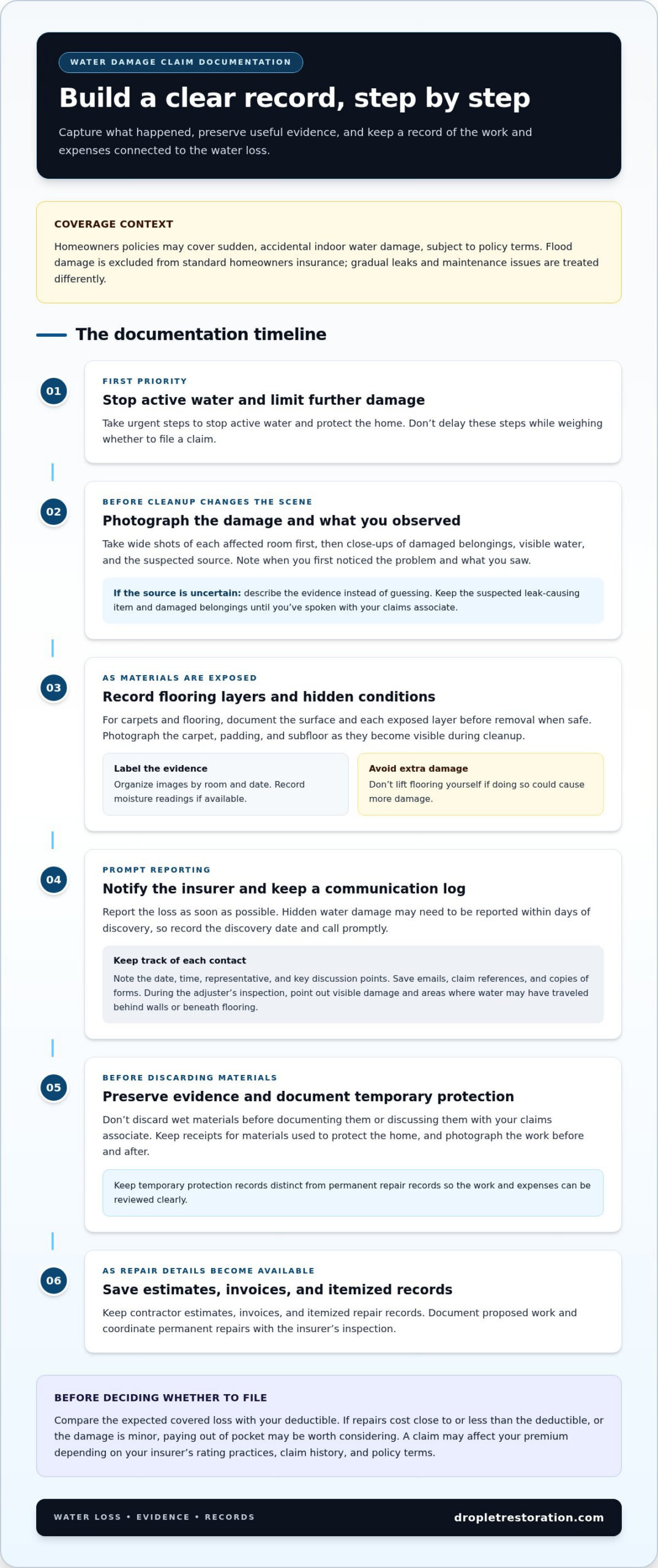
A claim may affect your premium, depending on your insurer’s rating practices, your claim history, and your policy terms. Before filing, compare the expected covered loss with your deductible. If repairs cost close to or less than the deductible, or the damage is minor, paying out of pocket may be worth considering. Multiple recent claims may also factor into your decision. Don’t delay urgent steps to stop active water and limit further damage while you weigh your options.
Build a clear record before cleanup changes the scene. Photograph or video each affected room, damaged belongings, visible water, and the suspected source. Take wide shots first, then close-ups of stained drywall, swollen trim, and damaged furniture. Note when you first noticed the problem and what you observed. If the source is uncertain, describe the evidence instead of guessing. Keep the suspected leak-causing item and damaged belongings until you’ve spoken with your claims associate.
For carpets and flooring, document the surface and each exposed layer before removal, when safe. Photograph the carpet, padding, and subfloor as they become visible during cleanup. Record moisture readings if available, and label images by room and date. Don’t lift flooring yourself if doing so could cause more damage. A photo showing water near a washing machine, for example, can establish the location but not the cause on its own.
Report the loss to your insurer as soon as possible. Hidden water damage may need to be reported within days of discovery, so note the discovery date and call promptly. Log conversations, including the date, time, representative, and key discussion points. Save emails, claim references, and copies of forms. During the adjuster’s inspection, point out visible damage and areas where water may have traveled behind walls or beneath flooring.
Separate temporary protection from permanent repairs. Keep receipts for materials used to protect your home, and photograph the work before and after. Save contractor estimates, invoices, and itemized repair records as they become available. These documents link expenses to the loss and show what work addressed the damage. Don’t discard wet materials before documenting them or discussing them with your claims associate.
What is the average cost of water damage restoration in the United States? The cost varies by case. The extent of the water, affected materials, and drying needs shape the work required. A detailed record of damaged areas and repair expenses can help clarify the scope, whether you file a claim or pay for repairs yourself.
Sudden discharge versus seepage and maintenance
Homeowners policies often distinguish sudden water releases from repeated seepage or damage related to maintenance. The cause and timeline can affect coverage, so record what happened and what you observed.
Sudden Discharge and Seepage
A sudden discharge is an unexpected release, such as a pipe that ruptures and quickly soaks a room. Seepage develops gradually, often from a small leak hidden behind a wall or under a sink. The distinction matters because policies may cover sudden, accidental damage while excluding repeated seepage.
Document visible conditions as soon as you find them. Photograph the pipe, appliance, wet materials, and surrounding area before cleanup changes the scene. Note when you first noticed water and whether the leak appeared active. For example, a newly split supply hose differs from a cabinet base that has darkened over time.
An inspection can help establish where water traveled and which materials it affected. Keep receipts for temporary materials and repair work, and preserve the suspected failed part when practical. Don’t describe a leak as sudden if the evidence shows ongoing moisture. Accurate observations help distinguish an abrupt event from gradual damage.
Gradual Leaks and Long-Term Damage
Gradual damage develops over time as plumbing connections, seals, or appliances leak repeatedly. A slow drip beneath a sink may swell cabinetry, while a persistent roof leak can stain ceilings and damage insulation. Homeowners insurance generally excludes damage caused by poor maintenance, and long-term seepage is often excluded even when the affected area is hidden.
Watch for signs of a developing leak, such as a sudden increase in your water bill, a musty smell, bubbling paint, or a soft cabinet base. These signs don’t prove the cause, but they give you specific observations to record. Note which fixtures were used, where moisture appeared, and whether the affected area changed after you shut off a fixture.
Routine maintenance can reduce the risk of avoidable leaks. Inspect plumbing connections and appliance hoses for visible wear, and replace damaged parts. Run a sump pump every few months and clean it annually before the rainy season. Flush a hot water tank every 6 months to remove sediment. Keep maintenance receipts and inspection notes with household records.
When you find active water, stop the flow if it’s safe and document the source before making repairs. Prompt action can limit further damage, while clear records help explain whether the loss began suddenly or developed over time.
Flood damage and separate flood insurance
Flood losses are treated differently from sudden indoor plumbing leaks. Identify where the water began and how it entered, because that distinction helps determine which policy may apply.
Separate Flood Insurance
Flood insurance is a separate policy, not an automatic extension of standard homeowners insurance. According to the Federal Emergency Management Agency, homeowners may be able to purchase separate flood insurance through the National Flood Insurance Program. This matters when outside water inundates a home and damages floors, walls, or personal property.
For a flood loss, record the water’s path from outdoors into your home. Photograph exterior water levels, entry points, affected rooms, and damaged belongings. Note whether water entered through a door, foundation opening, or garage, and describe what you observed without guessing. These details can help an adjuster distinguish flooding from an indoor plumbing failure.
Review the flood policy for its definitions, coverage limits, deductible, and covered property. A homeowners policy and a flood policy may address different causes, so keep their documents separate. List damaged personal property by room, with descriptions and photos when possible. Preserve receipts or other ownership records for items whose value or condition may be difficult to establish after cleanup.
Flood and External Water Exclusions
Flood and external water exclusions describe circumstances standard homeowners insurance may not cover. The Federal Emergency Management Agency states that standard homeowners insurance in the United States doesn’t cover flood damage, regardless of the source of the floodwater. The water’s route still matters when documenting the event: outside floodwater differs from a sudden indoor pipe discharge.
Rain entering through a window broken in a storm may be evaluated differently from water that rises outdoors and enters the house. Record the broken opening, storm impact, water marks, and affected areas. Don’t label the event a flood or a roof leak unless your observations support that description. A careful account gives the adjuster facts to compare with the policy wording.
Flood insurance also has policy terms and limits. The word “flood” alone doesn’t establish which property or expenses qualify. Keep the declarations and policy wording available, then match each damaged item to its location and the water’s entry point. If both policies may apply to different parts of the loss, document those areas separately. For example, list damage from outdoor floodwater separately from a later plumbing leak, with dates and photos for each event.
Reasons water claims are denied
A denied claim often comes down to the cause, timing, or evidence of the loss. A policy may cover water damage from a sudden, accidental event but exclude gradual seepage or damage linked to poor maintenance. For example, a washer hose that suddenly bursts differs from a connection that leaks unnoticed and damages flooring over time. The insurer’s decision depends on the policy wording and the facts supporting the reported cause.
Maintenance issues can undermine a claim. A frozen pipe may be excluded if the home wasn’t adequately heated, and long-term leaks may be treated as preventable damage. If an overflow or leak starts, failing to take reasonable steps to stop the water and limit further loss may lead to a reduced or denied payout. Keep a clear record of what happened, what you did, and when you acted.
DIY cleanup or repairs can complicate the insurer’s assessment. Insurers may reduce or reject payment if they determine that work you did caused additional damage or obscured the original conditions. Protect your home from further harm, but photograph the affected area and materials before removing them, when safe. Keep receipts for temporary supplies, and record which work was temporary and which was permanent.
Delays and inconsistent information can create avoidable problems. Policies may set claim-filing deadlines, and missing one can lead to denial. Report the loss promptly, describe your observations consistently, and keep notes from calls with the insurer. If you’re unsure whether a pipe or appliance caused the damage, state what you saw instead of presenting a guess as fact. Clear documentation helps distinguish the known source from an assumption.
Mold-related claims can be challenged when records don’t connect the mold to a covered water event or show that its cause was addressed. Keep inspection findings and repair records explaining how moisture entered and what was done to correct the problem. Mold cleanup coverage varies by policy, so review the applicable terms alongside the water-loss decision. A denial letter should state the insurer’s reason and cite relevant policy language.
If the insurer denies a claim, review the denial letter and policy, then gather an independent evaluation of the damage. Submit an appeal or reconsideration request through the insurer’s process, with supporting records that address the stated reason. If water is still damaging the home, arrange water damage restoration to address the physical loss while you handle the claim separately.
Droplet Restoration: Water Damage Restoration
Droplet Restoration provides Water Damage Restoration when a leak or flood has affected your home and cleanup needs to begin. Its technicians work to mitigate damage and start recovery, and the company works directly with insurance providers to help streamline the claims process.
After documenting visible damage and reporting the loss, restoration support can help address affected areas and organize the work ahead. Share your records and describe what happened so restoration can proceed alongside your insurance claim.
For water damage restoration support, contact Droplet Restoration.
Move Forward With a Clear Recovery Plan
Keep your home’s recovery moving while your claim is reviewed. An organized claim file can support the insurance process, but damaged property still needs practical attention. Keep your records accessible and note new issues as they appear, so details aren’t lost between claim discussions and restoration work.
For homeowners managing water damage insurance claims, restoration support can help address physical damage while you focus on the insurer’s process. Droplet Restoration offers Water Damage Restoration, Fire Damage Restoration, and Mold removal for property damage. The right service depends on the damage your home has experienced.
Take the next step when you’re ready. Contact Droplet Restoration to discuss restoration support for your property. You can move forward one clear decision at a time.
Frequently Asked Questions
Should You Pursue Legal Advice?
Consider speaking with an attorney if a denial turns on disputed policy language, the insurer’s explanation doesn’t address your evidence, or you’re unsure how to respond. Bring the policy, denial letter, claim correspondence, photos, estimates, and a timeline of events. These records help explain the disagreement. For a straightforward claim still under review, first ask the insurer to explain its decision and appeal process in writing.
What types of water damage are covered by homeowners insurance?
Homeowners insurance may cover resulting damage from sudden, accidental indoor events, such as a pipe rupture or appliance overflow. Dwelling coverage may apply to the home’s structure, while personal property coverage may apply to damaged belongings. The policy’s deductible, limits, exclusions, and the cause of the loss affect payment. Coverage for resulting damage doesn’t necessarily include repairing the failed appliance or plumbing part.
How do I file a water damage insurance claim step by step?
To file water damage insurance claims, first stop the water if it’s safe and take reasonable steps to limit further damage. Next, photograph affected rooms and belongings, then promptly report the loss to your insurer. Keep a dated record of calls and save receipts for temporary repairs. Arrange the insurer’s inspection, point out visible and hidden damage, and keep estimates and repair documents together. Homeowners in Vancouver, Battle Ground, Camas, Ridgefield, La Center, Longview, Kelso, Woodland, Castle Rock, and Kalama can follow this same record-keeping sequence.
What evidence and documents do I need for a water damage claim?
Gather dated photos or videos, a room-by-room inventory, receipts, repair estimates, and notes about when you found the damage. Include the suspected source and what you observed, without guessing if it’s uncertain. For belongings, record descriptions and any available proof of ownership, such as purchase records. Keep damaged items and suspected leak-causing parts until you’ve discussed them with your claims associate.
How long do I have to report water damage to my insurer?
Report the damage as soon as you discover it. Your policy may set a claim-filing deadline, and hidden damage should generally be reported within days of discovery. Record the discovery date, when you contacted the insurer, and the claim reference. If moisture appears later in another area, document when and where you found it, then notify the insurer instead of assuming it belongs to the original report.
Can an insurer deny a water damage claim, and how can I appeal?
Yes. Water damage insurance claims can be denied because of an exclusion, missed deadline, maintenance issue, or insufficient evidence. Read the denial letter alongside your policy and identify the specific reason given. Then gather records that address it directly, such as inspection findings, dated photographs, or repair documents. Submit an appeal or reconsideration request through the insurer’s stated process, and keep copies of what you send.
Will filing a water damage claim increase my insurance premiums?
A claim can affect premium decisions, but there’s no single increase that applies to every homeowner. Insurers may consider claim history and other rating factors under their own practices. Before filing, compare the expected covered loss with your deductible and consider whether the damage is minor or close to that amount. Multiple recent claims may also influence your decision to pay out of pocket.
How do flood insurance claims differ from standard homeowners insurance claims?
Flood insurance is separate from standard homeowners insurance, which doesn’t cover flood damage in the United States, according to the Federal Emergency Management Agency. A flood claim is handled under the flood policy’s terms, while a homeowners claim concerns covered causes under that policy. Document the water’s entry point, affected rooms, and damaged belongings so the adjuster can assess which event and policy apply.
