
A failed pipe can spread water through a home, smoke can settle after a fire, and a storm can damage the building envelope. When damage happens, emergency restoration services Vancouver WA property owners can call help contain the problem and begin recovery.
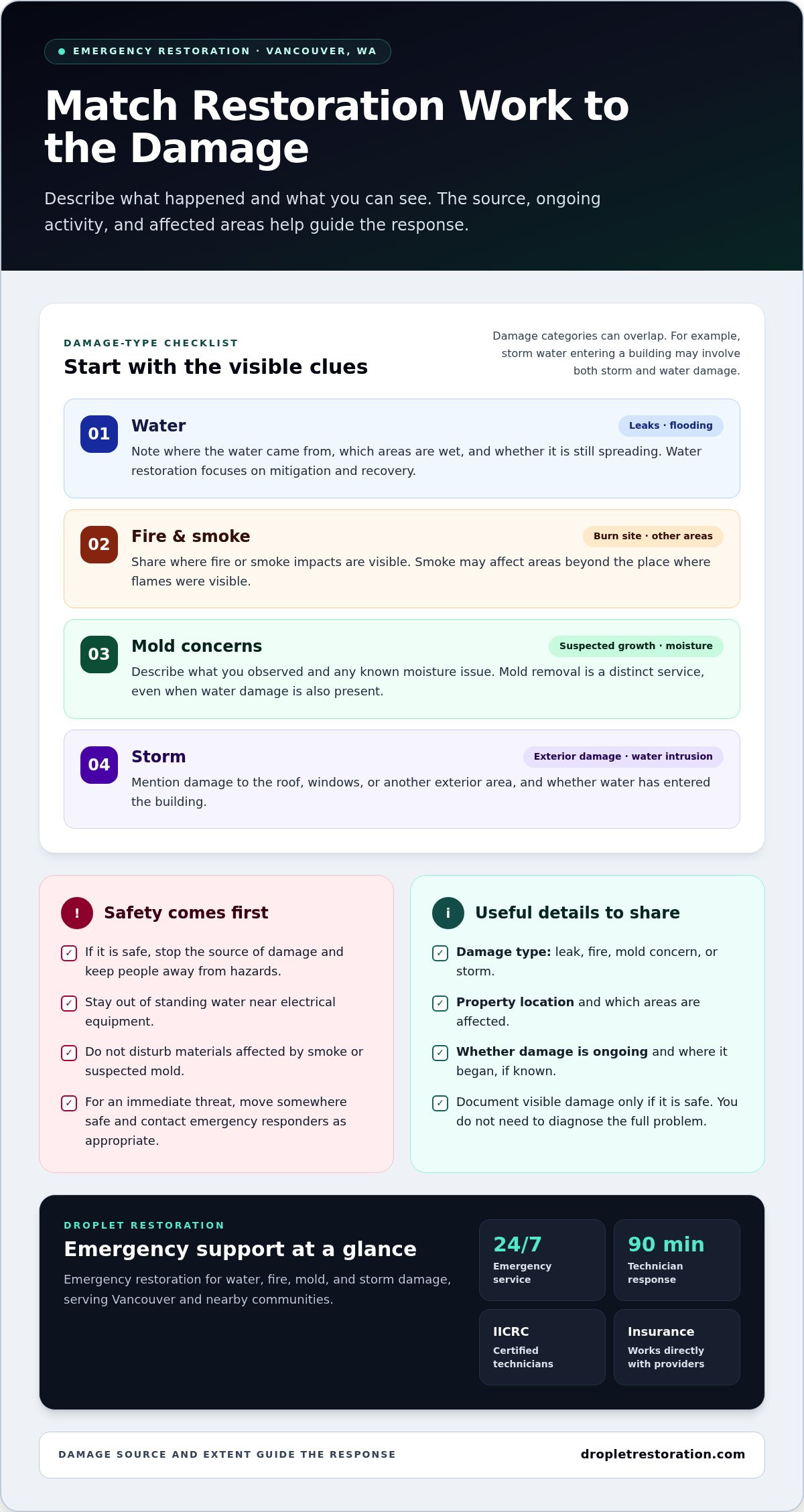
First, protect people. If it’s safe, stop the source of damage and keep people away from hazards. Don’t enter areas with standing water near electrical equipment or disturb materials affected by smoke or suspected mold.
This guide covers what to do first, which restoration services address different types of damage, and what to expect with mitigation and insurance coordination. Droplet Restoration provides 24/7 emergency water, fire, mold, and storm damage restoration. Its certified IICRC technicians respond within 90 minutes to mitigate damage and begin recovery, and the team works directly with insurance providers to streamline claims.
Key Takeaways
- Match the response to the damage: leaks need water restoration, fire impacts need fire restoration, mold concerns need mold removal, and storm damage calls for storm restoration.
- The right response depends on the source and extent of the damage, not just the category it seems to fit.
- Protect people first, stay clear of unsafe areas, and document visible damage only if it’s safe to do so.
- When arranging help, share the damage type, property location, and whether the damage is ongoing.
- Droplet Restoration serves Vancouver and nearby communities, including Camas, Ridgefield, and Battle Ground.
What counts as an emergency restoration situation in Vancouver, WA?
Emergency restoration is mitigation and recovery after sudden property damage. It may involve water from a burst pipe or flooding, fire and smoke impacts, mold concerns connected to moisture, or storm damage. The appropriate response depends on what happened, whether damage is continuing, and which parts of the property are affected. A short description or photo can help explain the situation, but it can’t show the full extent of damage.
Mitigation means taking practical steps to limit ongoing damage while recovery begins. Safety comes first. If there’s an active fire, a strong burning smell, unstable building damage, or another immediate threat, move to a safe place and contact emergency responders as appropriate. Don’t enter an area that may be unsafe.
Professional restoration can address several kinds of damage. Disaster restoration describes recovery work after events such as water and fire damage, but the work needed at a specific property depends on its conditions.
Which types of property damage need an urgent response?
Seek prompt assessment when a leak or flooding is actively wetting rooms, materials, or belongings. Fire damage can extend beyond what’s visibly burned because smoke may affect other areas. Storm damage may include water entering through a damaged roof, window, or other exterior opening.
- Water: Leaks and flooding, especially when water is still spreading.
- Fire and smoke: Visible fire damage or smoke impacts beyond the burn site.
- Mold concerns: Suspected growth or persistent moisture that needs professional attention.
- Storm: Exterior damage or water intrusion after severe weather.
When should Vancouver-area property owners call for help?
Call promptly when damage is active, spreading, or affecting an occupied area. That may mean a leak reaching more rooms, smoke affecting usable spaces, or storm-related water entering a building. The examples point to a need for timely attention, but the right response depends on the circumstances.
While arranging help, keep people away from hazards and avoid standing water near electrical equipment. Don’t disturb materials that may be affected by smoke or suspected mold. If it’s safe, note what you can see and where the damage began. When you contact emergency restoration services Vancouver WA property owners can access through Droplet, share the damage type, property location, and whether the problem is ongoing. You don’t need to diagnose the damage yourself.
What emergency restoration services can address water, fire, mold, and storm damage?
Different damage calls for different restoration work, and categories can overlap. Water intrusion after a storm, for example, may involve both storm and water damage. Droplet Restoration provides emergency water, fire, mold, and storm damage restoration. Describe what happened and what you can see rather than trying to diagnose the full problem.
- Water damage restoration: For property damage involving leaks or flooding, with a focus on mitigation and recovery.
- Fire damage restoration: For property damage caused by fire, including impacts that may extend beyond visibly burned areas.
- Mold removal: For mold concerns that need attention as a distinct issue, even when moisture or water damage is also present.
- Storm damage restoration: For property impacts from a storm, which may include exterior damage or water intrusion.
Noting where water came from, whether damage is ongoing, and which areas are affected helps explain the situation. For a broader overview of recovery after a disaster, the U.S. Department of the Interior’s Natural Disaster Recovery resource covers recovery at a wider community level.
How do water and fire restoration needs differ?
Water restoration addresses water-related damage and supports mitigation and recovery. Fire restoration addresses fire-related impacts, including effects beyond the area where flames were visible. A property may have more than one type of damage, so explain what happened and which areas are affected.
For emergency restoration services Vancouver WA property owners can access, share what happened and what you can see. You don’t need to determine the full scope yourself. Droplet’s emergency restoration support addresses the relevant service category.
When do mold or storm concerns call for restoration help?
Mold removal is a distinct service, not another name for water damage restoration. If mold is a concern, describe what you’ve observed and any known moisture issue. Storm restoration addresses property impacts from a storm. If an exterior opening has let water inside, explain both the visible damage and what happened.
For homes and businesses in Vancouver and nearby communities, report the damage plainly. Note whether it followed a leak, fire, mold concern, or storm, and whether it appears ongoing. This gives the restoration team a useful starting point without turning an initial description into a diagnosis.
How should you compare emergency restoration services in Vancouver, WA?
When choosing a restoration team, focus on whether its services match the damage, when it is available, its technician qualifications, and how it handles insurance coordination. These details clarify what support is available and what the next steps may involve. Droplet Restoration provides 24/7 emergency service for water, fire, mold, and storm damage.
Availability: Droplet Restoration provides 24/7 emergency restoration services.
Technician qualifications: Droplet’s technicians are certified by the Institute of Inspection, Cleaning and Restoration Certification (IICRC).
Damage types: Droplet addresses water, fire, mold, and storm damage. Its services cover common property damage categories that may arise in an emergency.
Insurance coordination: Droplet works directly with all insurance providers to streamline claims. This support does not determine whether a claim is approved or what it covers.
What does a response-time statement actually tell you?
Droplet states that its technicians respond within 90 minutes to mitigate damage and begin recovery. This is a response statement, not a guarantee that a technician will arrive at the property within 90 minutes. Share whether damage is ongoing so the team understands the immediate concern.
A stated response window describes a response, not a guaranteed arrival at your door. Knowing the distinction helps set expectations during a stressful situation.
Why do qualifications and insurance coordination matter?
Droplet’s technicians are certified by IICRC, and the company works directly with all insurance providers to streamline claims. Insurance coordination can help manage claim-related communication, but it doesn’t promise coverage, approval, or a particular payment outcome. Keep records of visible damage and claim communications as recovery moves forward.
Consider whether the service addresses the damage category and explains its role in restoration and insurance coordination. Droplet offers these services for water, fire, mold, and storm damage, with a team available around the clock.
What should you do while arranging emergency restoration?
Keep the first steps simple: protect people, stay clear of hazards, document what you can see if it’s safe, and call for help. You don’t need to identify every affected material or determine the full cause before making contact. Sharing clear information helps emergency restoration services Vancouver WA property owners need start with the immediate concern.
- Protect people. Move occupants away from the affected area if there’s an immediate hazard. If the property feels unsafe, leave and contact emergency responders as appropriate.
- Avoid unsafe areas. Don’t enter spaces with hazards or retrieve belongings if doing so could put someone at risk.
- Document visible damage if safe. A brief description or photos from a safe location may help explain what you’re seeing. Don’t approach damage for a better view.
- Call and describe the situation. Share the damage type, property location, and whether the problem is still active or spreading.
These steps help you communicate the immediate concern without attempting technical cleanup or making a diagnosis. For example, say that water is still entering a room rather than guessing how far it has traveled behind a wall. If damage followed a storm, describe what you observed without assuming which part of the building failed.
What information helps during the first call?
Start with what happened: a leak, flooding, fire, smoke, mold concern, or storm damage. Explain whether the source appears active and which areas are visibly affected. Share whether the property is a home or business and provide its address. These details help Droplet understand the restoration need and respond to the situation you describe.
If you’re unsure which service category applies, describe the visible problem instead of choosing a technical label. “Water is coming through the ceiling” is more useful than guessing the cause. Mention any safety or access concerns you can identify from a safe place. Don’t delay the call to gather information you can’t safely reach.
What should you avoid doing before help arrives?
Don’t put yourself at risk to protect property. Avoid entering affected areas if you’re unsure whether they’re safe, and don’t handle electrical, structural, or other hazards. Don’t begin cleanup that requires entering an unsafe space. Photograph or note visible damage only when you can do so without approaching danger. Personal safety comes first.
Once you’re in a safe place, contact Droplet Restoration for emergency help and share the damage type, address, property type, and whether damage is ongoing. This gives the team a practical starting point.
How can Droplet Restoration help with an emergency in Vancouver, WA?
Droplet Restoration provides emergency water, fire, mold, and storm damage restoration for homeowners and businesses in Vancouver and nearby communities. Its local service area includes Battle Ground, Camas, Ridgefield, La Center, Longview, Kelso, Woodland, Castle Rock, and Kalama.
Each service addresses a different need. Water damage restoration focuses on water-related damage and recovery. Fire damage restoration addresses fire impacts, mold removal handles mold concerns, and storm damage restoration responds to property impacts from storms. When damage overlaps, share what you know so the team can assess the situation.
What should customers expect from Droplet’s emergency response?
Droplet’s certified IICRC technicians respond within 90 minutes to mitigate damage and begin recovery. This is a stated response time, not a guarantee that a technician will arrive at the property within 90 minutes.
Droplet provides 24/7 emergency restoration services. When you reach out, share the property location, damage type, and whether the damage is ongoing. Those details help the team understand the immediate concern.
How do you request emergency restoration help?
Contact Droplet and describe the damage in plain terms. Explain whether you’re dealing with water, fire, mold, or storm damage, what you can see, and whether the problem is still active. Provide the property address and say whether it’s a home or business. You don’t need to diagnose the cause or map every affected area before calling.
Droplet works directly with all insurance providers to help streamline claims. This coordination can support the claims process, but it doesn’t determine coverage or guarantee approval. Keep track of information you share and claim-related communications as restoration moves ahead.
For property owners seeking emergency restoration services Vancouver WA, Droplet brings water, fire, mold, and storm restoration together with certified technicians and insurance coordination. Contact Droplet Restoration for emergency help.
Take the next step toward recovery
You don’t need every answer before reaching out. If damage has disrupted your home or business, start with what you know and explain what you’re seeing. A clear description helps the team understand the situation without requiring you to diagnose the damage or decide how recovery should proceed.
Choosing emergency restoration services Vancouver WA property owners can reach is one step toward recovery. If damage is contained or still developing, share the situation and let Droplet help you determine the next steps.
Contact Droplet Restoration for emergency help.
Frequently Asked Questions
Is emergency restoration available 24/7 in Vancouver, WA?
Yes. Droplet Restoration offers 24/7 emergency restoration for water, fire, mold, and storm damage. Share the property location and whether damage is active when you contact the team.
How quickly can a restoration technician respond in Vancouver, WA?
Droplet states that technicians respond within 90 minutes to mitigate damage and begin recovery. This is not a guaranteed arrival time. Describe the damage and whether it’s ongoing when you call.
What types of emergencies do restoration services handle?
Droplet’s services address water, fire, mold, and storm damage. The right response depends on what happened and the property’s condition. Describe the affected areas and visible damage rather than trying to diagnose the cause.
Should I call a restoration company before contacting my insurance provider?
If damage is active, prioritize safety and arrange appropriate restoration help. Droplet works directly with insurance providers to streamline claims, but coverage and approval depend on your policy. Document visible damage only when safe.
Can emergency restoration services help after both water and storm damage?
Yes. Droplet provides both services. If a storm has caused water intrusion, explain what happened and whether water is still entering the building. This helps direct the response. Emergency restoration services Vancouver WA homeowners can reach address both damage categories.
Does Droplet Restoration serve areas outside Vancouver, WA?
Yes. Service communities include Battle Ground, Camas, Ridgefield, La Center, Longview, Kelso, Woodland, Castle Rock, and Kalama. Share the property address when requesting help.
Are Droplet Restoration technicians certified?
Yes. Droplet Restoration technicians are certified by the Institute of Inspection, Cleaning and Restoration Certification (IICRC). Describe the damage and affected areas so the team can understand the situation.
