
A hidden leak can damage a home before water becomes visible. Musty odors, unusual stains, and unexplained changes in water use are signs of hidden water damage worth investigating.
Look for patterns rather than isolated marks. Changes that recur in the same area can help you decide what to inspect and when to get professional help.
This guide explains how to recognize signs of hidden water damage and choose a practical next step.
Key Takeaways
- Check whether the water meter moves while faucets and water-using appliances are off to help identify a possible plumbing leak.
- Notice persistent damp odors and indoor moisture; they can point to concealed problems even when mold isn’t visible.
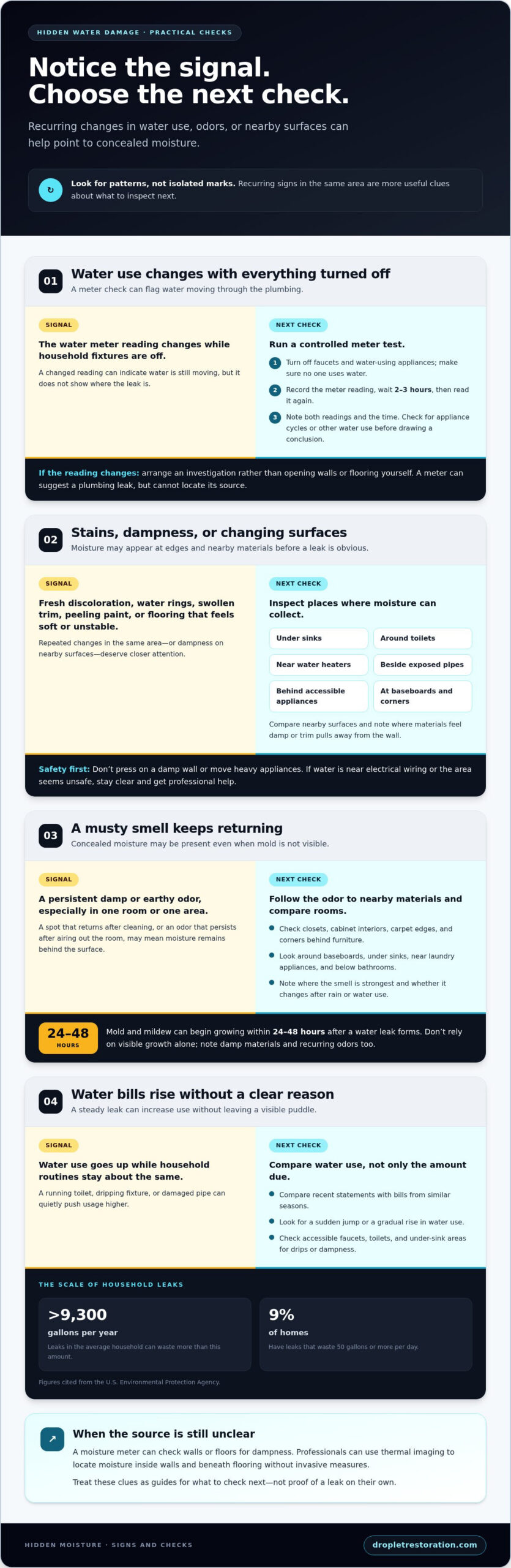
- According to the U.S. Environmental Protection Agency, household leaks can waste more than 9,300 gallons per year, and nine percent of homes have leaks that waste 50 gallons or more per day.
- Look for flooring that feels soft, spongy, or unstable, along with changes to nearby walls and baseboards.
- Track recurring stains, water rings, or other changing signs so you can act on a developing problem before it spreads.
1. How Do You Tell If You Have a Hidden Water Leak?
Start with two checks: watch the water meter, then inspect areas where moisture can collect. Signs of hidden water damage may show up at baseboards, corners, or flooring before a leak is obvious. Look for fresh discoloration, swollen trim, peeling paint, or dampness where the floor meets the wall. Compare nearby surfaces, too. A suspicious patch is more concerning if adjacent flooring or another corner also feels damp.
To check your home’s water meter, first turn off faucets and water-using appliances. Make sure no one uses water during the test. Record the meter reading, wait 2-3 hours, then read it again. A changed reading can indicate water is moving through the plumbing even though household fixtures are off. Check appliance cycles and other water use before drawing a conclusion, since use during the test can affect the reading.
A meter that continues moving while all household fixtures are off can point to a plumbing leak. It won’t show where the leak is. If the reading changes during a 2-3 hour period with no water use, the leak may be underground in the service line or beneath a slab foundation. Make a note of both readings and the time, then arrange an investigation rather than opening walls or flooring yourself.
Inspect under sinks, around toilets and water heaters, behind accessible appliances, and beside exposed pipes. Check the cabinet floor, pipe connections, baseboards, and nearest corner at each location. Look for water rings, damp materials, or trim pulling away from the wall. For example, a dry kitchen sink cabinet beside a swollen baseboard may mean moisture is traveling inside the wall or beneath the floor.
Condensation usually forms on cool, exposed surfaces, such as the inside of a window. A plumbing leak more often causes recurring dampness near a fixture, pipe, or ceiling below plumbing. If the water meter moves while fixtures are off, that supports the possibility of a leak but doesn’t identify its source. Use these clues to guide your next check, not as proof on their own.
Don’t press on a damp wall or move heavy appliances to investigate. If the area seems unsafe or water is near electrical wiring, stay clear and get professional help. A moisture meter can check walls or floors for dampness; professionals can use thermal imaging to locate moisture inside walls and beneath flooring without invasive measures. These tools can help find concealed wet areas when a visual inspection and meter check don’t reveal the source.
2. Musty odors, mold, and indoor moisture
A persistent musty smell can signal moisture before a stain or mold is visible. Check where the odor lingers, including closets, cabinet interiors, carpet edges, and corners behind furniture. For example, an earthy, damp smell near a bathroom wall may point to moisture inside the wall, even if the paint looks normal. A rotten odor can also come from water trapped in materials or a hidden leak that needs attention.
Look for visible mold or mildew, but don’t rely on sight alone. Growth can develop where water remains trapped, including carpet padding beneath carpeting and concealed areas behind walls. Mold and mildew can begin growing 24-48 hours after a water leak forms. If you find a patch, note its location and whether the surrounding area feels damp or smells musty. A spot that returns after cleaning may indicate that moisture remains behind the surface.
Indoor moisture can leave several clues. Excess humidity may cause condensation on the inside of windows, while a lingering damp odor can suggest mold growth even without visible patches. Compare rooms: if one bedroom smells musty but nearby rooms don’t, focus on its exterior walls, flooring, and nearby plumbing. Recurring odors after airing out the room deserve attention, especially alongside damp materials or new stains.
Recent water damage may feel damp while the material remains firm. Older damage may smell musty, feel soft, or show mold growth. Check around baseboards, under sinks, beside laundry appliances, and near ceilings below bathrooms. Note where the smell is strongest and whether it changes after rain or water use. This pattern can help distinguish localized moisture from general indoor humidity, though no single odor proves there’s a leak.
Hidden water damage can create health and structural concerns: mold may cause respiratory issues, particularly for people with asthma or allergies, while prolonged moisture can weaken building materials. Unaddressed excess moisture can become destructive within 24 hours. Keep people with asthma or allergies away from areas with visible mold, and don’t ignore soft materials, spreading stains, or a damp ceiling.
Don’t mask a musty smell with air freshener; track its location and inspect nearby surfaces for moisture. If persistent odor comes with visible mold or damp materials, water damage restoration can address the damage and help identify the affected area.
3. Unexpected increases in water bills
A higher water bill can be an early warning of a leak, particularly if household routines haven’t changed. Compare recent statements with bills from similar seasons. Check the water-use total, not just the amount due, since rates or other charges can change. If water use rises without a clear reason, investigate before the extra consumption continues.
According to the U.S. Environmental Protection Agency, leaks in the average household can waste more than 9,300 gallons of water per year, and nine percent of homes have leaks that waste 50 gallons or more per day. A small, steady leak can add up even when it doesn’t create a visible puddle. A running toilet, dripping fixture, or damaged pipe can quietly push usage higher.
Look for a pattern, not just one unusually high bill. Compare current water use with the previous reading and note whether the increase began suddenly or built over time. A sudden jump can point to a new leak or a fixture that keeps running. A gradual rise also warrants investigation, especially if household water use hasn’t changed.
Pay attention to water pressure, too. A sudden drop in pressure alongside a higher bill can indicate a leak in the plumbing system. Check accessible faucets and fixtures for drips, then look around toilets and under sinks for dampness. If the bill keeps climbing while visible areas remain dry, water may be escaping behind a wall, beneath flooring, or outside the home.
Not every unexplained increase comes from a pipe inside the house. Irrigation systems, outdoor spigots, and underground lines can also cause water loss. Check around outdoor taps and irrigation equipment for persistently wet ground or soggy patches. A dry interior doesn’t rule out a leak beyond the home’s walls.
Keep a simple record of water bills, usage readings, and pressure changes. Note when you first spotted an increase and whether stains, damp drywall, or a musty odor appeared nearby. A rising bill alongside these signs can help identify a hidden leak and areas to inspect. Don’t wait for mold or visible damage to confirm the warning.
If water use remains unusually high after you check accessible fixtures and outdoor sources, arrange a plumbing investigation. Share the bill history and any pressure changes with the professional assessing the issue. These details can help narrow the search and limit further water loss while the source is located.
4. Unusual flooring changes and warm spots
Water stains, bubbling paint, and warped floors can mean moisture has reached building materials. They don’t reveal the leak’s exact source, but changes that spread or return deserve attention. Check whether discoloration appears beside a floor, wall, or ceiling, and note how it has changed since your last inspection. A stain near a bathroom, for example, may line up with plumbing above or behind the surface.
Walk slowly across the floors and compare nearby areas. Hardwood may cup, crown, buckle, warp, or discolor when water reaches the boards. A floor that feels spongy or soft underfoot may have moisture trapped beneath the surface. Loose tiles, separated seams, or baseboards pulling away from walls add more clues. Record each affected spot and its distance from sinks, appliances, or plumbing.
Carpeting can conceal water beneath the visible surface. Check for dampness, discoloration, or a musty odor, then inspect the carpet edge without pulling up a large area. Water trapped beneath carpeting can affect the padding even when the top fibers seem mostly dry. If a wet patch returns after drying, the source may still be active.
A warm floor spot needs context. If one area feels warmer than nearby flooring, note its location and whether plumbing or a hot-water line runs beneath it. A persistent warm patch in that area is a reason to investigate for a plumbing leak, especially if the flooring is soft or the water bill has changed. Warmth alone doesn’t establish the cause, so don’t cut into the floor to search.
Inspect nearby walls and finishes for bubbling paint, peeling wallpaper, or softened drywall. Moisture behind a wall can damage surfaces and spread to adjacent flooring. Note whether a stain grows, the floor feels different at its edges, or the area changes after water use. These patterns can help distinguish a one-time spill from ongoing moisture affecting the structure.
Soft or sagging floors and walls call for caution. Don’t keep testing an unstable surface or place heavy objects on it. Photograph the affected area, keep people away from a sagging section, and arrange a professional assessment. Water damage restoration can address wet materials and assess the affected area, while plumbing repairs may be needed to stop the source. Contain the moisture first, then plan the appropriate repair.
5. Hidden water damage warning signs
Common signs of hidden water damage include spreading water rings, yellow or brown discoloration, bubbling paint, and damp, cool areas. They may appear on ceilings, walls, or around trim even when no pipe is visibly dripping. Watch for changes over time. A stain that grows or returns after a surface repair can indicate ongoing seepage behind the finish.
Check ceilings below bathrooms, laundry areas, and upstairs plumbing. Water-saturated drywall or plaster can weaken, leading to cracks, bulges, or sagging. Peeling or flaking paint and a musty odor may accompany the mark. Treat a sagging ceiling as a safety concern: don’t press it, stand beneath it, or try to open it yourself.
Check suspect walls for cold, damp patches that feel different from nearby surfaces. Water trapped behind walls or in insulation can create localized dampness, while consistently high indoor humidity may also indicate a hidden leak. A hollow sound when you gently tap a wall can point to damaged drywall or deteriorated material behind it, but sound alone won’t identify the source.
Look for recurring patterns rather than judging one mark on its own. Photograph a ceiling ring or wall stain and note its edges, color, and location. If the discoloration spreads, a new ring forms, or the same patch returns after repairs, moisture may still be getting in. Compare the mark with nearby plumbing, roof-facing surfaces, and ceilings below bathrooms to help narrow down where the water may be traveling.
Electrical warning signs call for extra caution. Water-damaged wiring can be dangerous, so don’t touch wet outlets, switches, or exposed wires. Keep clear of the area and leave the electrical hazard to a professional. Likewise, don’t push on softened drywall if there may be water inside. A surface that sinks or feels depressed may be damaged, but only inspect it by touch if the area is safe.
After finding a suspicious mark, first stop the water source if you can do so safely. Keep people away from sagging ceilings or wet electrical areas, and document changes with photos. Don’t cover stains with paint before the moisture source is addressed; that hides evidence without stopping water. If damage is spreading or the source remains unclear, arrange a professional assessment and schedule water damage restoration to address affected materials and start recovery.
Droplet Restoration: Water Damage Restoration
Droplet Restoration provides Water Damage Restoration for hidden leaks that leave damp materials, recurring stains, or damaged flooring. A restoration assessment can identify affected areas and guide the next steps. If mold is present, Droplet Restoration also offers mold removal. The right response depends on the source and extent of damage, so share what you’ve noticed, such as a musty odor, a changing stain, or soft flooring. Acting when you spot a pattern can help contain the damage and begin recovery. Contact Droplet Restoration to discuss your property’s water damage and restoration needs.
Protect the next step
Don’t wait for a small clue to become a larger disruption. If signs of hidden water damage keep returning, limit access to affected areas, avoid disturbing wet or weakened materials, and arrange an assessment. Clear observations, such as where a stain has changed or which rooms smell damp, can help start the conversation.
Droplet Restoration provides Water Damage Restoration and mold removal for properties affected by moisture, as well as Fire Damage Restoration. The right response starts by understanding the damage and addressing the affected area. You don’t need to identify the source yourself before getting help.
Contact Droplet Restoration for help with the next step toward restoring your property. Act with a clear plan, and you can move forward with greater confidence.
Frequently Asked Questions
How Do You Tell If You Have a Hidden Water Leak?
Look for a pattern connecting water use with changes in your home. For example, a damp patch that appears after using a bathroom fixture suggests a different source than condensation on a cold window. Note when the area changes, which fixtures were used, and whether the same spot returns. A brief record can help distinguish a plumbing issue from surface moisture and make an assessment more focused.
How do I find water leak issues in my home?
Start with accessible plumbing and surfaces, then narrow down the affected area. Check beneath sinks, around toilet bases, near appliance connections, and along floors below plumbing. Look for dampness, residue, or materials that feel different from nearby surfaces. If you find a wet area, don’t pull up flooring or cut into drywall. Photograph the location and note nearby fixtures before arranging an assessment.
What are Some Common Signs of a Household Water Leak?
Common signs include recurring damp patches, unexplained water use, a drop in water pressure, or surfaces changing without an obvious spill. A toilet that keeps refilling or a cabinet floor that becomes damp may offer a more direct clue. Consider how the clues fit together: a stain below a bathroom and damp trim nearby may suggest water is traveling from plumbing above.
Where is hidden water damage most likely to occur?
Hidden damage often develops near water sources or where moisture can collect out of sight. Check beneath sinks, around water heaters, behind accessible appliances, and on ceilings below bathrooms or upstairs plumbing. Also inspect corners and flooring beside exterior walls after water intrusion. For example, in a home with a laundry area beside a hallway, moisture may affect the wall or floor beyond the appliance.
How can you detect hidden water damage without opening walls?
Start with visual clues and non-invasive checks. Compare suspect surfaces with nearby dry areas, look for recurring discoloration, and note damp or cold spots. A moisture meter can check walls or floors, while thermal imaging can help locate moisture behind surfaces. Record locations and changes. These checks can identify areas for closer assessment without damaging drywall or flooring.
Can musty odors or mold indicate hidden water damage?
Yes. A musty odor that persists in one room can indicate concealed moisture, even when mold isn’t visible. Check nearby closets, carpet edges, and surfaces around plumbing for dampness or discoloration. Mold growth signals moisture, but doesn’t pinpoint its source. If the odor returns after airing out the room, focus on finding the moisture rather than masking the smell.
What tools do professionals use to find hidden water damage?
Professionals can use moisture meters to check building materials and thermal imaging to locate temperature patterns associated with hidden moisture. These tools help assess walls and floors without immediately opening them. A visual inspection also matters: readings are most useful when considered alongside stains, damp odors, and the building’s layout. For example, a ceiling mark beneath a bathroom can guide attention toward the plumbing above.
When should hidden water damage be handled by a professional?
Get professional help if moisture keeps returning, damage spreads, a ceiling sags, or water is near electrical wiring. Droplet Restoration provides water damage restoration for affected properties in Vancouver, Battle Ground, Camas, Ridgefield, La Center, Longview, Kelso, Woodland, Castle Rock, and Kalama. A professional assessment can identify the affected area and appropriate restoration steps without requiring you to open walls or flooring.
