
What should you do first after a storm damages your property? Don’t rush inside to inspect it. The safest first step is to check for immediate danger, including downed power lines, a gas smell, injuries, or visible structural damage. It’s understandable to worry that water or roof damage will get worse while you wait, but a careful response can protect people and preserve important evidence. Knowing what to do after storm damage helps you act with purpose instead of adding risk.
This checklist will guide you through the next steps: keep people away from hazards, document damage with photos or video when it’s safe, and take reasonable steps to limit further loss. You’ll also learn how to contact your insurer and organize useful claim records. Once immediate hazards are under control, professional storm damage restoration can help contain damage and move recovery forward. Take it one step at a time: protect people first, preserve the evidence, then begin the restoration process.
Key Takeaways
- For what to do after storm damage, wait for official all-clear guidance and keep clear of downed lines, unstable structures, and possible electrical hazards.
- Capture visible damage from a safe location, then note when you noticed it and which areas are affected.
- Take temporary steps to limit further loss only if you can do so without entering an unsafe area.
- Give your insurer a clear report with the date, affected areas, safe photos, and known immediate concerns.
- After hazards are controlled, Droplet Restoration provides 24/7 emergency storm damage restoration in Vancouver and nearby communities.
Post-Storm: Protect People Before Property
If you’re deciding what to do after storm damage, start with people, not the building. Pause before stepping outside or entering a damaged area. Wait for official all-clear guidance, check for immediate danger, and keep everyone away from hazards. A missed photo or wet belonging can be dealt with later. An injury can’t be undone.
Use this calm first check:
- Follow updates from local emergency officials and the National Weather Service before assessing outdoor damage.
- Stay clear of downed power lines, sagging wires, damaged utility equipment, and visibly unstable structures.
- Keep out of floodwater, off damaged roofs, and away from any area that may have electrical hazards.
- Contact emergency services if someone faces immediate danger or needs urgent assistance.
When is it safe to go outside after a storm?
Wait for official guidance that conditions are safe, then look for hazards from a protected location before approaching the property. Severe weather can include different threats, and its types of severe weather and their impact can vary. A storm may leave hidden dangers even after the wind and rain ease. Don’t approach fallen trees, damaged utility equipment, or sagging wires. If you can’t assess an area without getting close to a hazard, leave it alone.
Floodwater deserves the same caution. It may conceal debris, unsafe ground, or electrical hazards. Don’t walk or drive through it to reach a damaged room, vehicle, or outbuilding. If you see damage to a roof or structure, don’t climb up or enter to investigate. Wait until the area can be assessed safely.
What should you avoid doing during the first inspection?
Keep the inspection visual and limited to safe places. Don’t touch wiring, outlets, appliances, or other electrical equipment in wet or visibly damaged areas. Water and electrical hazards can be difficult to judge by sight, so don’t test equipment or move items to reach it. If a room looks unsafe, step back rather than entering to check what’s damaged.
Don’t shift heavy or unstable debris. It may conceal hazards or make a damaged structure less stable. Keep children and pets away from the property’s affected areas, including rooms or yards that appear accessible but haven’t been assessed. Set a clear boundary and stay on the safe side of it.
Only move toward the next step when people are safe and you can do so without approaching a hazard. If you’re unsure whether an area is safe, don’t enter it. Property and belongings matter, but they can wait until the immediate risks are under control.
Document storm damage around your Vancouver-area property
Once you can observe the property safely, create a clear record before the scene changes. Start with what you can see from a safe location. Don’t enter an unstable building, cross debris, or get closer to a hazard just to capture better evidence. A useful part of what to do after storm damage is making your notes and photos easy to understand later, even if you’re tired or dealing with several affected areas.
Which storm damage photos and notes are useful?
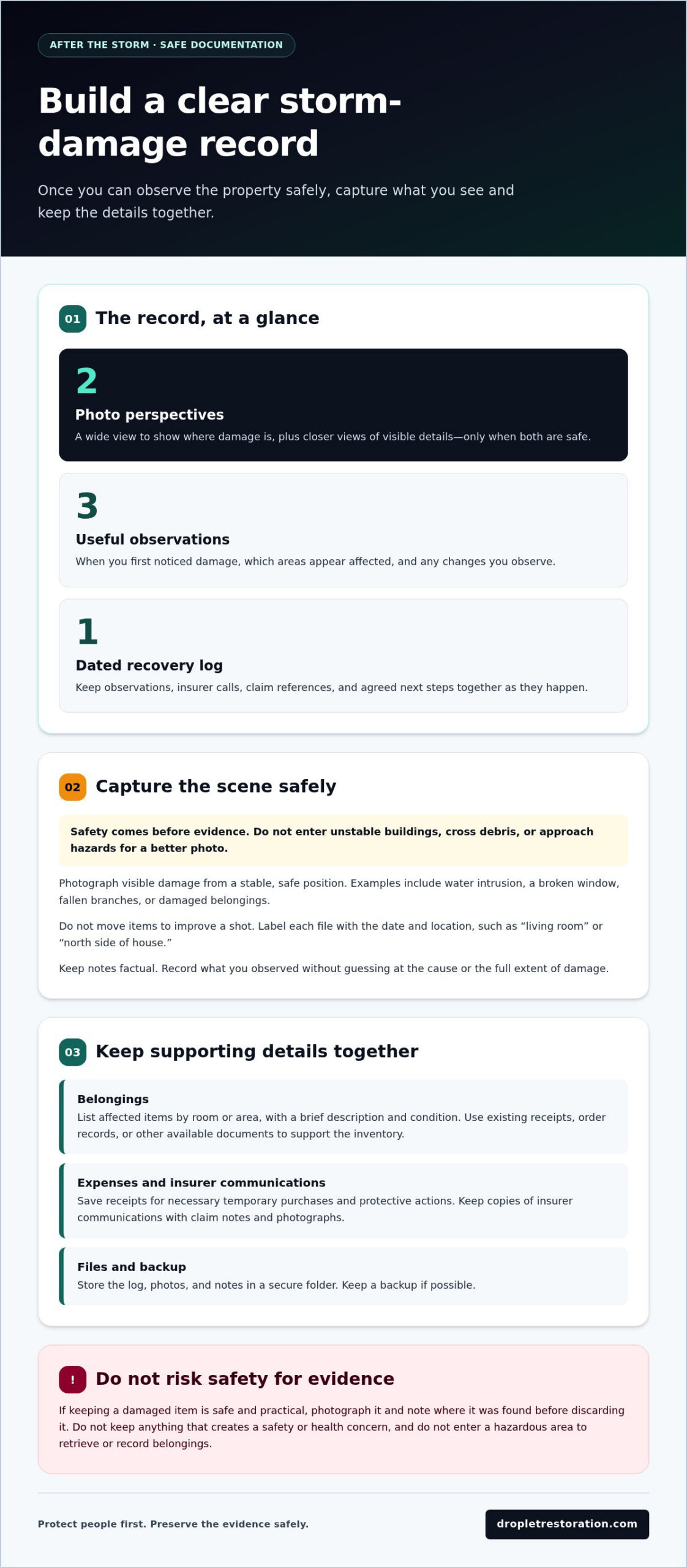
Take a wide view to show where the damage is, then closer photos to capture visible details, only when both are safe. You might document water intrusion, a broken window, fallen branches, or damaged belongings from a stable, safe position. Avoid moving items to improve a shot. Label each file with the date and location, such as “living room” or “north side of house,” so the images stay organized.
Pair the images with brief observations. Note when you first noticed the damage, which rooms or outdoor areas appear affected, and any immediate changes you observe, such as water spreading or a new leak. Keep the wording factual. You don’t need to guess what caused the damage or how extensive it is.
How can you keep a clear recovery record?
Use one dated log to keep important details together. Add observations, calls with your insurer, claim references, and agreed next steps as they happen. A single record makes it easier to follow the sequence of events and find details when you need them. Store it with your photos and notes in a secure folder, and keep a backup if possible.
- List affected belongings by room or area, including a brief description and condition.
- Use existing receipts, order records, or other available documents to support your inventory.
- Save receipts for necessary temporary purchases and protective actions.
- Keep copies of insurer communications with your claim notes and photographs.
If keeping a damaged item is safe and practical, document it before discarding it. Take photos and note where it was found. Don’t keep anything that creates a safety or health concern, and don’t enter a hazardous area to retrieve or record belongings. Safety comes before evidence.
Clear records can make it easier to explain what you’ve observed as recovery moves forward. If storm damage has affected your property, Droplet Restoration’s storm damage restoration is a practical next step after immediate hazards are controlled.
Limit further storm damage safely in Southwest Washington
After you’ve confirmed it’s safe to be near the affected area, focus on simple steps that don’t put you at risk. Temporary action is appropriate only when you can do it without entering an unsafe space or handling damaged systems. If water is actively coming in or damage is worsening, promptly report it to your insurer and restoration team. Don’t delay that call to attempt a repair yourself.
Which temporary steps may be reasonable?
Keep any action low-risk and within a safe, accessible area. If the route is clear and the belongings are easy to move, shift undamaged items away from the affected space. A container may catch a minor drip if you can place it without reaching under damaged surfaces or entering a questionable room. Stop if water spreads, the floor feels unstable, or you notice a new hazard.
Keep people away from affected rooms until electrical and structural risks have been addressed. A closed door or clear verbal instruction can help prevent someone from walking into a space out of habit. Don’t try to remove standing water near wiring or electrical equipment, and don’t operate equipment in a wet or damaged area. For what to do after storm damage, a useful rule is simple: if a step requires you to touch a damaged system, climb, lift unstable debris, or enter an unsafe area, leave it to trained professionals.
When should you stop and leave the area alone?
Step away from standing water near electrical equipment or damaged wiring. Leave rooms with sagging ceilings, unstable walls, or unexplained movement. Don’t climb onto a roof, move structural debris, or attempt electrical, roof, or structural repairs. These conditions can change without warning, and a quick attempt to protect belongings can expose you to serious danger.
When you report active water intrusion or worsening damage, describe what you can observe from a safe place: where it’s happening, whether it appears to be changing, and which areas are affected. Avoid guessing at the source or entering a hazardous area to investigate. That clear update helps the insurer and restoration team understand the immediate concern and decide on next steps.
For homeowners in Vancouver and nearby Southwest Washington communities, professional storm damage mitigation can help contain ongoing damage after immediate hazards are controlled. Droplet Restoration provides storm damage restoration, helping move the property from an urgent situation toward recovery without asking you to take on risky cleanup or repairs yourself. Preserve your safety first, report changes promptly, and let qualified restoration professionals assess the damage.
Contact your insurer and organize the next recovery steps
Once immediate hazards are controlled, contact your insurer through its established claims channel and report the storm damage clearly. You don’t need to have every answer before making the first report. Share what you know, identify what you haven’t been able to inspect safely, and ask what information or next steps the insurer needs. Keep the report factual, and don’t assume that a particular repair or loss will be covered until the insurer explains how your policy applies.
What information should you have ready for the first call?
A short, organized summary can make the conversation easier. Before calling, gather the property address, the approximate time or date you noticed the damage, and a brief description of the visible impact. Note which rooms or areas are affected and whether you’ve noticed an urgent concern, such as active water intrusion. Share photographs only if you took them from safe locations.
- Describe the damage you can see without guessing about its cause or full extent.
- Summarize any temporary steps taken to protect the property.
- Write down the claim number, instructions, and any requested follow-up.
- Ask questions when a direction or next step isn’t clear.
Keep those details with your damage record so you can refer to the same information in later conversations. If you can’t access part of the property safely, say so rather than entering to gather more evidence.
How can you keep insurance and restoration communication organized?
Use one communication log for both the claim and recovery coordination. Record the date, the name or department you contacted, the main points discussed, and the next step each party agreed to. Save emails, claim messages, and relevant documents in the same secure location as your photos and notes. That gives you a clear timeline and helps prevent instructions or questions from getting lost in a stressful period.
Share relevant documentation with the people handling the recovery, and keep your own copies. If new damage becomes visible or conditions change, update the insurer and restoration team with a concise description. Continue to distinguish what you observed from what still needs assessment. This makes communication more useful without making promises about coverage or outcomes.
Droplet Restoration works directly with insurance providers, helping coordinate restoration information as the recovery process moves forward. If you’re in Vancouver or a nearby community and need local help after a storm, connect with Droplet Restoration about storm damage restoration.
Start storm damage restoration in Vancouver and nearby communities
Once immediate hazards are controlled, professional assessment and mitigation can help bring structure to the recovery process. A restoration team can evaluate visible storm damage, identify affected areas, and plan appropriate cleanup and restoration work. This gives you a clearer picture of what needs attention without requiring you to enter unsafe spaces or attempt repairs yourself.
What can a restoration team help manage?
Storms can leave several kinds of damage behind, including water intrusion, broken windows, and damage to interior spaces. Trained restoration technicians can assess storm-related water damage and other restoration needs, then carry out mitigation and cleanup suited to the situation. The work can help address damage and support the move toward recovery, but the scope and timeline depend on the property and conditions. No assessment can determine an insurance coverage decision.
Droplet Restoration provides 24/7 emergency storm damage restoration in Vancouver and nearby communities. Its IICRC-certified technicians respond within 90 minutes to mitigate damage and begin recovery. This is a response time, not a guarantee of arrival at a particular time. Professional support is a practical next step when hazards are controlled and the damage needs a closer assessment.
How do you take the next step?
Share the property location, the visible damage, and any immediate concerns when arranging restoration support. Include whether water is still entering or whether an area remains inaccessible because it may be unsafe. You don’t need to investigate hazards to provide useful information. A clear account of what you can safely observe helps the response begin with the right context.
Use this short checklist to prepare:
- Provide the property address and a safe way to reach you.
- Describe the areas you can see are affected, such as a room, roofline, or outbuilding.
- Point out active water intrusion or other immediate concerns without approaching them.
- Keep your photos and damage notes available to share as recovery moves forward.
Droplet Restoration also works directly with insurance providers during recovery, helping coordinate restoration information as the claim process continues. Keep your insurer’s directions and restoration updates together so you can refer to them as needed. Taking this step can reduce the burden of managing separate conversations while you focus on your property and household.
Droplet Restoration serves Vancouver, Battle Ground, Camas, Ridgefield, and surrounding communities. If you need storm damage support, request storm damage restoration support.
Move forward one clear step at a time
Storm damage can make the days ahead feel uncertain, but recovery doesn’t have to be managed all at once. Focus on the next decision you can make safely. Keep your records accessible, communicate changes as they arise, and let a professional assessment help clarify the restoration work your property needs. You don’t have to solve every question before starting.
Knowing what to do after storm damage is about creating a steady path from the first safe response to a more secure home. If damage remains or you need help planning the restoration process, take the next step with a local team familiar with storm recovery.
Arrange storm damage restoration support and move toward recovery with a clear plan. One practical step at a time can help restore a sense of control.
Frequently Asked Questions
What should I do first after storm damage?
Protect people first. Wait for official guidance before going outside, and avoid downed lines, unstable structures, and floodwater. Once it’s safe, document visible damage without entering hazardous areas. Then contact your insurer and arrange mitigation. If someone faces immediate danger, seek urgent assistance before addressing property concerns.
Can I clean up storm damage myself?
Only take minor steps in clearly safe areas, such as moving an undamaged item from an accessible spot. Don’t enter areas with electrical, structural, roof, or flood hazards or attempt risky repairs. Arrange a professional assessment if damage is extensive, water is affecting the property, or you’re unsure whether an area is safe.
Should I wait for my insurance adjuster before preventing more damage?
Contact your insurer promptly and follow its instructions, but prioritize personal safety. Document damage before taking temporary steps when practical. Don’t delay urgent hazard control, and never enter an unsafe area to act. Keep records of your actions, related receipts, photos, and insurer communications.
How do I document storm damage for an insurance claim?
Take photos of visible damage and belongings from safe locations. Add a dated description and inventory of affected items, then keep relevant receipts and claim communications together. Don’t climb, enter unstable spaces, or move hazardous debris for a better view. Ask your insurer for claim-specific instructions; documentation doesn’t guarantee coverage.
What should I do if storm damage causes a roof leak?
Keep people out of rooms with sagging ceilings or signs of instability. Catch drips only if the area is safe to enter. Don’t climb onto the roof or attempt risky repairs. Photograph visible damage from a safe location, contact your insurer, and seek professional mitigation for active water intrusion.
Who can help with storm damage in Vancouver, Washington?
Droplet Restoration provides storm damage restoration in Vancouver and nearby communities, including Battle Ground, Camas, Ridgefield, La Center, Longview, Kelso, Woodland, Castle Rock, and Kalama. Its IICRC-certified technicians respond to mitigate damage and begin recovery. The company also works directly with insurance providers during the recovery process.
