
Visible mold may be one sign of a larger moisture problem. Cleaning what you can see may not resolve the issue if dampness remains behind a wall, under flooring, or elsewhere. For mold removal Vancouver WA property owners need a response that considers both affected materials and moisture conditions.
When comparing cleanup options, look for a clear assessment, a defined work area, and an explanation of how moisture factors into the plan. Droplet Restoration’s certified IICRC technicians provide mold removal in Vancouver and nearby communities, and the team works directly with insurance providers to help streamline claims.
Key Takeaways
- Visible growth, musty odors, or recurring moisture are reasons to investigate, not proof of a specific cause.
- Professional mold removal in Vancouver WA considers affected materials and moisture conditions when shaping the response.
- Surface cleanup addresses what is visible, while an assessment can help clarify whether the issue extends further.
- Record affected areas, known moisture events, and relevant insurance details before arranging an inspection.
- A clear recovery plan defines the work and explains how moisture control and insurance coordination fit in.
Mold Removal in Vancouver, WA: Recognize the Problem and Define the Need
Start by noting where mold appears and whether you know of past or ongoing moisture in that area. Visible growth, a musty odor, or recurring dampness are reasons to investigate, but none confirms the cause or extent.
What visible mold can, and cannot, tell you
Appearance alone can’t identify a mold type or show how far an issue extends. A patch on a wall confirms visible growth there, but doesn’t prove there is growth behind it. Hidden moisture is possible, not certain. Record the location, surface, and any known water exposure. If you notice an odor without visible growth, note where it is strongest. The overview of Mold remediation describes general cleanup approaches and protective measures.
When a Vancouver-area property needs professional assessment
Recurring growth, persistent moisture, or concerns about affected building materials can make professional assessment useful. The response depends on conditions at the property, not a single visual clue or universal size cutoff. A spot on a cleanable surface may call for a different response than growth that returns after cleanup.
Conditions vary across Vancouver and nearby communities such as Camas, Battle Ground, and Ridgefield. Identifying moisture conditions matters because cleanup may not resolve growth if dampness continues. Note what you’ve observed and share it when arranging an inspection. These details help clarify what needs attention.
How Professional Mold Removal Works in the Vancouver Area
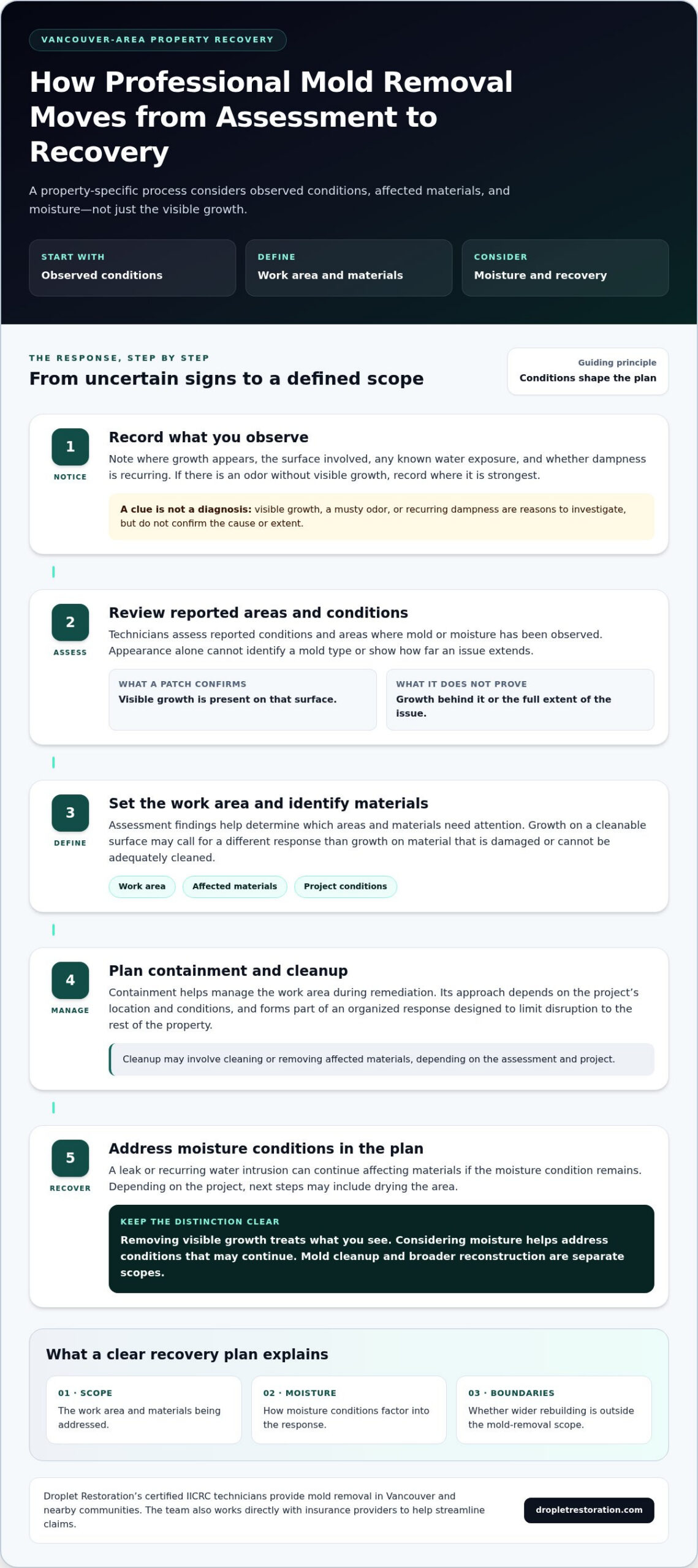
A professional response turns an uncertain problem into a defined scope of work. The plan depends on the property, affected materials, and moisture conditions. In general, the mold removal process moves from assessment and work-area planning to cleanup and attention to moisture.
Assessment, containment, and affected materials
Technicians assess reported conditions and areas where mold or moisture has been observed. They use that information to define the work area and determine which materials need attention. Growth on a cleanable surface may call for a different response than growth on material that is damaged or cannot be adequately cleaned.
Containment helps manage the work area during remediation. The approach depends on the project’s location and conditions. It is one part of an organized response, alongside decisions about affected materials and limiting disruption to the rest of the property. Droplet Restoration’s certified IICRC technicians carry out mold removal as part of property recovery.
Moisture conditions and the recovery phase
Cleanup addresses affected areas, but a lasting response also considers why they became damp. A leak or recurring water intrusion can continue to affect materials if the moisture condition remains. Depending on the project, next steps may include removing or cleaning affected materials and drying the area. Assessment findings shape the scope and recovery plan.
Removing visible growth treats what you see; addressing moisture helps prevent the same conditions from continuing. Review what the proposed scope includes. Mold cleanup and broader reconstruction are separate scopes: a remediation plan focuses on affected materials and moisture-related work. Any wider rebuilding should be clearly distinguished rather than assumed to be part of mold removal.
Useful plans explain the work area, materials involved, and how moisture conditions factor into the response. Droplet Restoration provides mold removal in Vancouver and nearby communities, with recovery needs assessed according to the property. To discuss an inspection, schedule a mold removal inspection with Droplet Restoration.
DIY Cleanup or Professional Mold Removal: Compare the Response
If growth is limited to a cleanable surface and the moisture issue is understood, careful surface cleanup may be a reasonable first step. But cleaning what’s visible doesn’t show whether moisture remains or other materials are affected. Recurring growth, damp building materials, or uncertainty about the extent can make professional assessment useful.
| Decision factor | Limited surface cleanup | Professional assessment |
|---|---|---|
| Scope | Focuses on the visible surface. | Evaluates reported conditions and defines the work area. |
| Uncertainty | May leave questions about affected materials unanswered. | Helps clarify which materials and areas need attention. |
| Moisture | Cleaning alone doesn’t establish whether dampness remains. | Considers moisture conditions as part of the response plan. |
When limited surface cleanup may not answer the whole question
A cleaned patch can look better while leaving the underlying moisture question unresolved. Note whether growth returns, the area stays damp, or nearby materials may have been affected. These observations help you decide whether surface cleanup addressed the visible issue or whether the property needs a closer assessment.
What professional remediation adds
A professional response brings assessment, work-area planning, and coordinated mitigation together. Technicians consider reported conditions and affected materials, then define the work being considered. This gives property owners a clearer basis for understanding what will be addressed and how moisture conditions fit into the plan. The response depends on assessment findings, not a one-size-fits-all approach.
Surface cleanup focuses on what’s visible; professional assessment clarifies the scope and considers whether moisture conditions remain. A mold removal Vancouver WA plan should match the property’s actual conditions rather than assume a small spot is harmless or every patch requires extensive work.
If recurring growth or uncertainty about affected materials leaves you unsure what to do next, Droplet Restoration can assess your mold removal needs. Schedule a mold removal inspection to discuss a response plan.
What Vancouver Property Owners Should Do Before Mold Removal
Prepare for an inspection by recording what you’ve observed and gathering relevant claim details. Avoid disturbing the affected area while arranging professional guidance.
Information to gather before an inspection
- Record locations: Note the rooms and surfaces where you see growth, moisture, or staining.
- Track changes: Write down when you first noticed the issue and whether it has spread, changed, or returned.
- Document moisture events: Note known leaks or water events, with dates if available. Take clear photographs of affected areas.
- Gather claim details: Keep relevant insurance information and existing claim documents together.
Keep your notes factual. Don’t try to determine whether an event is covered, and don’t disturb the affected area while arranging an assessment. Your observations give technicians and your insurance provider a clearer record of what you’ve noticed.
How insurance coordination fits into the response
Documentation supports a more organized conversation about the property and claim. Droplet Restoration works directly with insurance providers to help streamline claims. Coverage depends on your policy and the circumstances, so coordination does not guarantee payment. Keep observations and claim details together, then schedule a property damage inspection to discuss the response.
Arrange a mold inspection with Droplet Restoration to take the next step toward a clearly documented assessment.
Choose Local Mold Removal in Vancouver, WA with a Clear Recovery Plan
A clear recovery plan explains what work is in scope, how moisture conditions factor into it, and how next steps will be coordinated. This helps you make a practical decision without assuming every property needs the same response. For mold removal Vancouver WA property owners should look for a team that connects assessment findings to affected materials and recovery needs.
What local service and coordination look like
Droplet Restoration provides mold removal and property damage restoration in Vancouver and nearby southwest Washington communities, including Battle Ground, Camas, Ridgefield, La Center, Longview, Kelso, Woodland, Castle Rock, and Kalama. The team also handles water, fire, and storm damage restoration when recovery involves more than one type of property damage.
Droplet Restoration’s certified IICRC technicians respond within 90 minutes to mitigate damage and begin recovery. The team also works directly with insurance providers to help streamline claims. Coverage decisions depend on the policy and circumstances.
When reviewing a plan, look for a clear explanation of which areas and materials are being addressed, how moisture conditions inform the work, and what recovery steps are included. A specific outline helps distinguish mold removal from broader restoration needs.
Take the next step toward restoring the property
When requesting an inspection, share where you see growth or moisture, when you first noticed it, and any known leak or water event. Photographs or notes from earlier observations can provide useful context. You don’t need to diagnose the cause or decide what work is required before arranging an inspection. Start with what you’ve observed.
That information gives the assessment a practical starting point. The recovery plan can then reflect the conditions found at your property, rather than assumptions about what every mold concern requires. Clear communication about the affected area, moisture history, and claim details can also help keep the process organized.
Droplet Restoration serves Vancouver and nearby communities with mold removal and property damage restoration. To discuss the next step, Schedule a property damage inspection with Droplet Restoration. Share what you’ve observed so the team can begin addressing your property’s recovery needs.
Take the Next Step with Confidence
You don’t need to resolve every question about your property before moving forward. A focused inspection can help turn uncertainty into a response shaped around the property’s actual conditions. For mold removal Vancouver WA property owners, start by sharing what you’ve observed and asking for clarity about the proposed work.
Droplet Restoration is ready to help you take that step. Schedule a property damage inspection and begin a clear conversation about your property’s needs.
Frequently Asked Questions
Can I remove mold myself?
Limited surface cleanup may be manageable if the area is small, the surface can be cleaned, and the moisture issue is understood. That doesn’t establish whether other materials are affected. The EPA advises against using bleach on porous materials such as wood or drywall. If growth returns or you’re unsure what’s affected, professional mold removal in Vancouver WA can help clarify the next step.
How do I know if mold is hidden behind a wall?
You usually can’t confirm hidden mold from appearance alone. A musty odor, recurring dampness, staining, or changes in a wall’s surface can point to a moisture concern, but none proves mold is behind it. Note where and when you notice these signs, especially after a leak, and share that information during an assessment. Avoid opening the wall just to investigate; the cause and extent need evaluation.
Does homeowners insurance cover mold removal?
Coverage depends on your policy and the circumstances that led to the damage, so mold removal isn’t automatically covered in every situation. Review your policy and ask your insurer how it applies to your claim. Keep photographs, dates, and records related to the moisture event together. These materials can support a clear discussion, but they don’t determine the insurer’s coverage decision.
Can mold come back after it has been removed?
Yes, mold can return if conditions that support growth remain or develop again. Its return doesn’t, by itself, explain why it reappeared or establish whether earlier work was inadequate. Record where it shows up and when you notice it, then have the area and moisture conditions reassessed. This can help distinguish a recurring moisture concern from a separate issue elsewhere.
How long does professional mold removal take?
There isn’t one timeline for every project. The time required depends on the affected materials, the work area, and whether moisture-related work is needed. A project involving multiple rooms or materials may require a different scope than one limited to a single area. An assessment helps establish the work plan before a project-specific timeline is discussed in Vancouver, Battle Ground, Camas, Ridgefield, La Center, Longview, Kelso, Woodland, Castle Rock, and Kalama.
Is black mold always more dangerous than other mold?
No. A dark color alone can’t identify a mold type or determine how hazardous a particular indoor condition is. Different kinds of mold can look similar, and appearance isn’t a reliable basis for ranking risk. Focus on the affected area and moisture conditions rather than trying to identify growth by color. If you’re concerned about what you see, arrange an assessment instead of relying on visual identification.
